What Is Car Lift Troubleshooting?
Car lift troubleshooting is the process of identifying why an automotive lift does not raise, lower, hold, lock or stay level as designed. It covers the hydraulic power unit, cylinders, valves, cables, locks, arms, runways, electrical supply and structural alignment.
The goal is not to keep operating a questionable lift. The goal is to decide what can be checked safely, what must be repaired before use, and when a qualified lift technician should inspect the equipment.
A shop lift is a load-holding machine. Treat drift, uneven lifting and failed safety locks as safety faults first, not productivity problems.
What Should You Check First When a Car Lift Fails?
If a car lift fails to raise or lower, start with the safe basics. Do not work under a vehicle supported by a questionable lift. Lower the lift to the ground or to confirmed mechanical locks if the manufacturer procedure allows it, unload the lift when possible, and disconnect power before inspection.
Use this first-check table:
| Symptom | First Checks | Likely Area |
|---|
| Lift will not raise | Power supply, motor, contactor, oil level, suction path, relief valve | Electrical or hydraulic |
| Lift will not lower | Lowering valve, lock release, control signal, mechanical binding | Valve or lock system |
| Lift raises slowly | Low voltage, low oil, air in oil, worn pump, cold oil, heavy load | HPU or fluid |
| Lift drifts down | Cylinder seal, check valve, lowering valve leakage, hose leak | Hydraulic safety |
| Lift is uneven | Cable tension, carriage binding, air, cylinder imbalance, locks | Mechanical or hydraulic |
| Safety locks do not engage | Lock linkage, latch adjustment, air supply, cable issue, worn parts | Safety lock system |
| Pump runs but lift does not move | Coupling, pump wear, low oil, blocked suction, relief bypass | Hydraulic power unit |
If the symptom involves load holding, structural movement, cable damage or lock failure, stop operation and call a qualified service provider.
2-Post vs 4-Post Lift Problems
Two-post and four-post lifts share hydraulic power unit problems, but their mechanical faults often look different.
| Area | 2-Post Lift | 4-Post Lift |
|---|
| Load support | Vehicle supported by swing arms | Vehicle supported by runways |
| Common alignment issue | Column lean, arm position, carriage sync | Runway level, cable balance, latch position |
| Lock issue | Arm locks or carriage locks not engaging | Safety latches not engaging at all posts |
| Uneven movement | Cable tension, air, carriage binding, cylinder issue | Equalizer cable tension, runway friction, latch mismatch |
| Hydraulic issue | Shared HPU, cylinder and valve issues | Shared HPU, cylinder and valve issues, rolling jack circuits |
| Extra parts to check | Arms, adapters, columns, overhead cable | Runways, rolling jacks, cross beams, cables |
For a 2-post lift, watch for arm lock failure, improper vehicle pickup points, column movement and carriage synchronization. For a 4-post lift, watch for out-of-level runways, cable imbalance, latch engagement at each post and rolling jack performance.
How to Troubleshoot a Hydraulic Car Lift Safely
This sequence is for initial diagnosis, not a substitute for the lift manual or certified inspection.
- Secure the work area. Keep people away from the lift, remove the vehicle if safe, and follow lockout/tagout practices before electrical or hydraulic work.
- Check visible safety items. Confirm locks, cables, arms, runways, pins, hoses and fittings show no obvious damage.
- Check power and control. Verify supply voltage, motor contactor, fuse, switch, pendant or pushbutton, and emergency stop.
- Check hydraulic oil. Confirm the correct fluid level and condition. Foamy oil points to aeration, suction leaks or low oil.
- Check the power unit. Listen for motor operation, pump noise, relief bypass, valve coil clicks and abnormal heat.
- Check movement without guessing. If the lift moves unevenly, binds, drifts or fails to lock, stop and escalate to service.

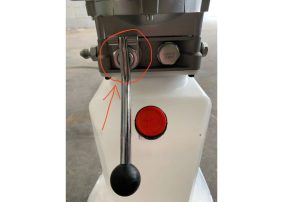 car lift lowering valve problem
Do not adjust relief pressure, bypass safety locks, loosen hydraulic fittings under load or test a lift with a vehicle overhead unless the manufacturer procedure and safety controls are in place.
Stop Using the Lift If You See These Problems
Some lift problems are not “watch and wait” items.
- The lift drifts down with a vehicle raised.
- One side rises faster than the other.
- Safety locks do not engage or release correctly.
- A cable is frayed, kinked, slack or visibly damaged.
- A column, runway or arm looks bent, cracked or shifted.
- Hydraulic oil leaks heavily from a cylinder, hose or fitting.
- The motor runs while the lift does not move.
- The lift makes popping, grinding or metal-on-metal noise.
- The vehicle is not stable on the pickup points or runways.
These symptoms can lead to dropped loads or structural failure. Remove the lift from service until it is inspected and repaired.
Car Lift Hydraulic Power Unit Specs to Check
The hydraulic power unit is the working source behind most hydraulic car lifts. It normally includes an electric motor, pump, reservoir, valve block, relief valve, check valve, lowering valve and control wiring.
When troubleshooting or replacing a car lift hydraulic pump, record these fields:
| Spec | Why It Matters |
|---|
| Lift type | 2-post, 4-post, scissor, parking lift or alignment lift |
| Rated capacity | Determines pressure and flow requirements with the lift geometry |
| Voltage and phase | 110V/220V single phase, 380V/400V three phase, or DC system |
| Motor power | Must match lift cycle, pressure and electrical supply |
| Pump flow | Controls lifting speed |
| Relief pressure | Protects cylinders, hoses and structure from overload |
| Reservoir volume | Supports cylinder volume, heat control and deaeration |
| Ports and fittings | Prevents hose mismatch during replacement |
| Valve logic | Power up/gravity down, power up/power down, manual release |
| Mounting pattern | Avoids installation rework |
| Duty cycle | Important for high-use repair shops |
If the current unit repeatedly overheats, lifts slowly under load, leaks at the manifold or cannot hold pressure after valve checks, replacement may be more practical than repeated repair. A matched hydraulic power unit should fit the lift rating and manufacturer requirements, not only the bolt pattern.
Common Hydraulic Faults and What They Mean
| Fault | What It Often Means | First Safe Action |
|---|
| Low oil level | Leak, poor maintenance or wrong fill procedure | Inspect for leaks before topping up |
| Foamy oil | Air ingestion, low reservoir level or suction leak | Stop and inspect suction path |
| Slow lowering | Lowering valve restriction, lock issue or cold oil | Do not force descent |
| Motor hums but does not run | Low voltage, capacitor issue, motor fault | Disconnect power and test supply |
| Pump runs loudly | Cavitation, air, blocked suction, worn pump | Stop before pump damage spreads |
| Drifts down | Internal leakage at cylinder, valve or check valve | Remove from service |
| Oil overheats | High duty cycle, relief bypass, wrong oil, small reservoir | Check cycle rate and relief path |
Hydraulic symptoms often overlap with electrical and mechanical faults. A lift that “sounds hydraulic” may still have a weak contactor, bad ground, locked carriage or binding cable.
Frequently Asked Questions
Why will my car lift not go up?
A car lift that will not go up may have low voltage, a failed motor contactor, low hydraulic oil, air in the oil, a worn pump, blocked suction, a relief valve bypassing oil or a lock that has not released. Start with power, controls, oil level and visible leaks before assuming the pump is bad.
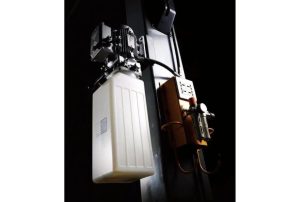 air in hydraulic lift fluid
Why will my car lift not lower?
A lift that will not lower may have a failed lowering valve, missing control signal, engaged safety locks, mechanical binding or a blocked return path. Do not force the lift down. Confirm lock release and follow the manufacturer lowering procedure.
Is it safe to use a lift that drifts down?
No. A lift that drifts down should be removed from service until inspected. Possible causes include cylinder seal bypass, check valve leakage, lowering valve leakage or external hydraulic leaks.
Why does a 2-post lift rise unevenly?
Uneven lifting can come from cable tension, carriage binding, air in the hydraulic system, cylinder imbalance, uneven floor loading or incorrect arm setup. Because this affects load stability, stop use and inspect before lifting another vehicle.
Why do 4-post lift safety locks fail to engage?
Safety locks may fail because of latch adjustment, cable imbalance, runway level issues, worn lock parts, air supply problems on pneumatic locks or mechanical binding. All posts should lock correctly before the lift is used.
What information is needed to replace a car lift power unit?
Provide lift type, capacity, voltage, motor power, pump flow, pressure setting, reservoir size, port type, valve logic, mounting pattern, control method and duty cycle. Photos of the nameplate, manifold, motor and hose connections help avoid mismatched replacements.
Closing
Car lift troubleshooting should start with safety, not speed. If the lift fails to raise, lower, lock, hold or stay level, isolate the problem before using it again. For hydraulic faults, the power unit, oil, valves and cylinders must match the lift design. Repeated failures are often a sign that the lift needs more than a quick adjustment. It may need a proper service inspection or a correctly specified replacement power unit.