Types of Hydraulic Check Valves | Ball, Lift, Swing, Cartridge
What Is a Hydraulic Check Valve?
Hydraulic check valves allow flow in one direction and block reverse flow. HydrathPower reviews cracking pressure, flow, mounting and pilot-control requirements. Load holding depends on the selected valve and complete actuator circuit, not the check-valve label alone.
Hydraulic Check Valve Selection Factors
- Prevent backflow, protecting pumps, cylinders, and sensitive circuits from reverse pressure spikes.
- Maintain line or actuator pressure when the supply is off, enabling reliable load holding in mobile and industrial hydraulics.
- Simplify circuit design with compact cartridges and built-in types that integrate cleanly in manifolds for space savings.
- Choose from ball, cone, built-in, and pilot-operated styles to match cracking pressure, leakage, and control requirements.
- Reduce maintenance risks by blocking reverse flow during service and isolating components safely.


Hydraulic Check Valve Body Materials
- 6061‑T6 Aluminum (≤207 bar): You prioritize low weight, corrosion resistance, and cost for moderate-pressure circuits, compact mobile systems, and manifold blocks where density savings matter.
- Steel/Ductile Iron (≤350 bar): You select robust bodies for higher-pressure lines, heavy-duty equipment, and thermally demanding environments that benefit from strength and durability.
Types & Configurations
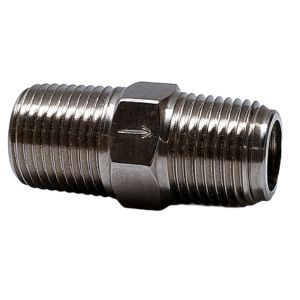
Ball Check Valve
Ball element to allow flow in one direction and block reverse flow. With spring bias, it cracks at a set pressure and reseats quickly for reliable sealing in cartridge manifolds and inline pipe bodies.
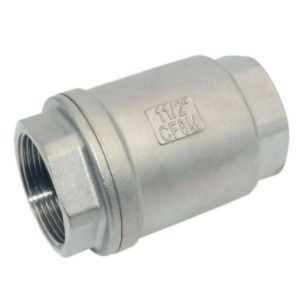
Spring-Loaded Check Valve
Spring-loaded mechanism to ensure orientation-independent closure and faster response against backflow, especially when gravity alone is insufficient. This improves pump and cylinder protection and reduces reverse flow spikes.
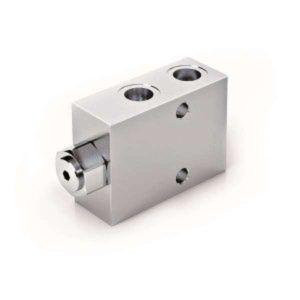
Pilot-Operated Check Valve
Hold loads securely and only release when a pilot signal is applied, enabling controlled cylinder movement and preventing free-fall. This design integrates a check element with a pilot release, ideal for mobile equipment and lifting circuits.
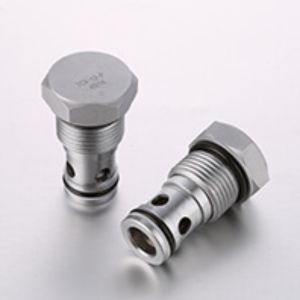
Inline/Cartridge Check Valve
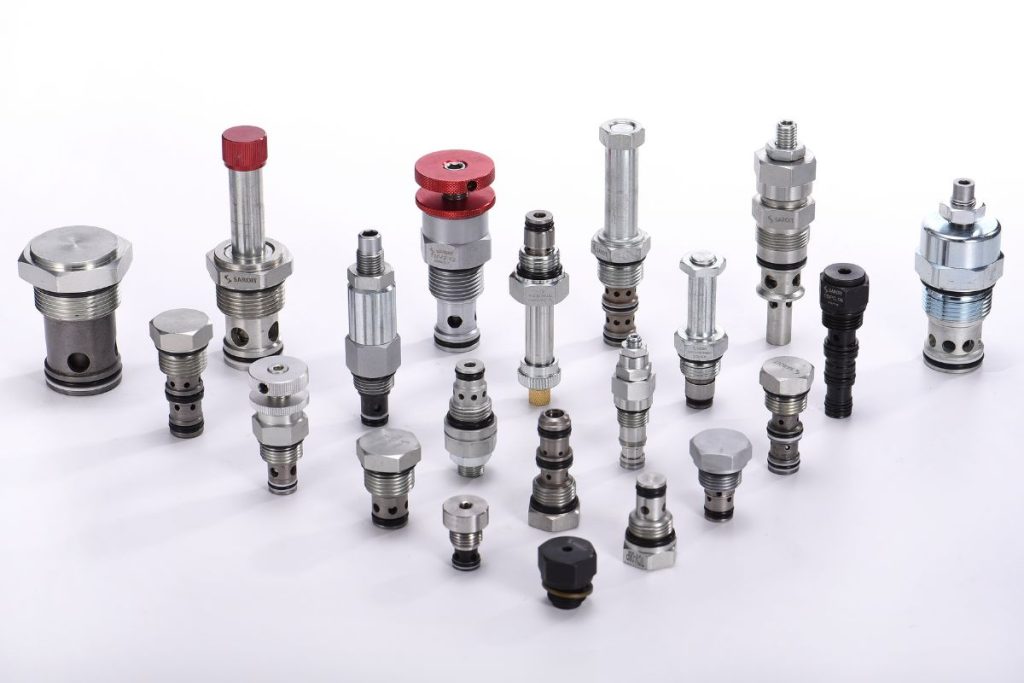
Install cone or ball poppets either as inline pipe-type bodies or cartridge elements inside standardized cavities, simplifying manifold packing and service while maintaining one-way protection.
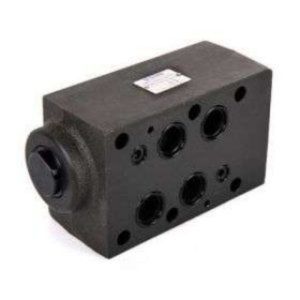
Modular Hydraulic Check Valve
Integrate a check function as a modular/sandwich plate in a stack system between the subplate and directional valve, saving space and enabling flexible circuit customization in mobile and industrial hydraulics.
Meet Us on The Trade Show
Hydrath attends exhibitions worldwide every year:
Hannover Messe
PTC ASIA
Bauma CHINA
You are welcome to book a visit to our exhibitions.
What does a hydraulic check valve do?
Allow flow in one direction and block reverse flow to prevent backflow and maintain system pressure.
When should you use a pilot‑operated check valve?
Secure load holding and controlled cylinder release; a pilot signal opens the valve for smooth movement.
How do you select cracking pressure?
Match the valve’s cracking pressure to circuit need(typical catalog options include 0.35 bar and 2.1 bar for ball-type cartridge)
Can you install check valves inline or as cartridges?
Yes, you can choose pipe‑type inline bodies or cartridge elements for manifold cavities to streamline packaging and service.
How do symbols differ for check valves?
You’ll find symbol variants showing spring‑biased vs. non‑spring check elements; conventions differ by standards and documentation.