Hydrath Hydraulic Pressure Reducing Valve Manufacturer
What Is a Hydraulic Pressure Reducing Valve?
A hydraulic pressure reducing valve regulates a branch at a lower pressure than the main supply. A typical normally-open design responds to downstream pressure and restricts flow as the setting is reached. HydrathPower reviews the required setting, flow, drain arrangement and mounting for the selected circuit.
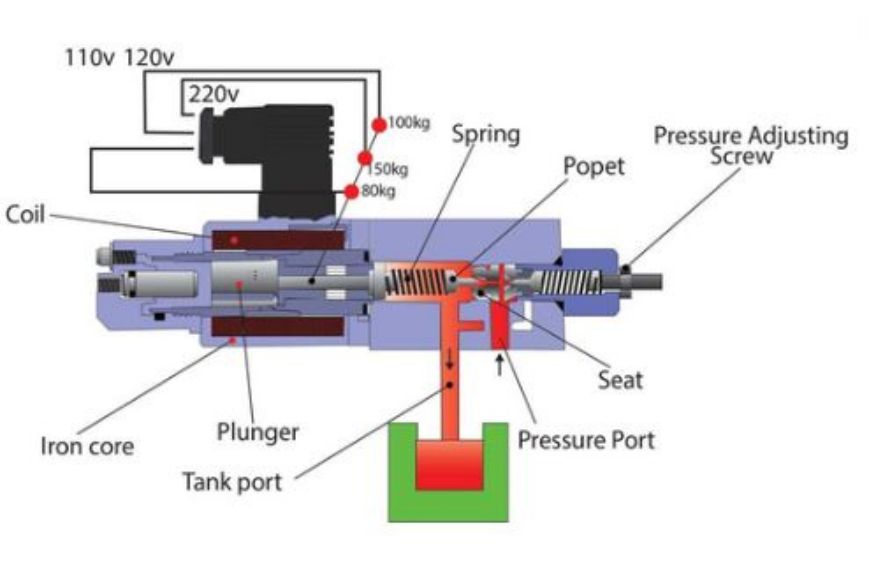
Hydraulic Pressure Reducing Valve Components
- Valve housing that interfaces with manifold or piping.
- Pressure spring that biases the spool toward open.
- Spool/piston slide valve that shifts to throttle or open based on downstream pressure.

Hydraulic Pressure Reducing Valve Selection Factors
- Local pressure limitation protects delicate circuits and components.
- Consistent clamp forces and test conditions improve repeatability.
- Reduced static pressure creep under no‑flow conditions enhances stability.
- More efficient operation by supplying only the pressure required to subsystems.
How A Hydraulic Pressure Reducing Valve Adjustment Works
- Set the desired secondary pressure.
- Downstream pressure below setpoint: valve remains open; free flow from inlet to outlet.
- Downstream pressure approaching setpoint: spool shifts to throttle the outlet; branch pressure stabilizes at the set value.
- Downstream pressure creeping above setpoint: excess bleeds via the drain line to tank; branch pressure returns to setpoint.
- Reverse flow condition: internal check arrangement blocks backflow.

Meet Us on The Trade Show
Hydrath attends exhibitions worldwide every year:
Hannover Messe
PTC ASIA
Bauma CHINA
You are welcome to book a visit to our exhibitions.
Types of Hydraulic Pressure Reducing Valve

- Pressure Reducing Valves
- Relief Valves
- Counterbalance Valves
- Pilot-operated Relief Valve
- Sequence Valves
- Solenoid Valve
- Unloading Valve
- Back Pressure Regulators
- Ball Valves
How does a pressure reducing valve work and adjust?
- Set the desired secondary pressure; below that, the valve stays open.
- As downstream pressure approaches the set point, the spring‑loaded spool shifts to throttle the outlet, holding a constant pressure.
- Excess pressure bleeds via a drain to tank.
Is the reducing valve normally open?
Yes, common designs are normally open and begin throttling only as downstream pressure approaches the set value.
Where should reducing valves be installed?
Typical placements include CNC clamping circuits, cylinder control branches, test rigs, mobile steering/brake/auxiliary circuits, and lubrication/cooling lines that need low, stable pressure.
What is the difference between reducing valves and relief valves?
Reducing valves regulate and hold a lower, constant branch pressure; relief valves vent excess pressure to tank only when a safety threshold is exceeded.