What Is Tire Changer Troubleshooting?
Tire changer troubleshooting is the process of finding why a tire machine will not spin, clamp, break beads, inflate, read pressure correctly or move smoothly. Most machines combine electric drive, compressed air, mechanical arms, cylinders, valves, clamps and protective heads.
The goal is not to keep forcing the machine through a job. The goal is to separate small shop-level checks from faults that need a technician, replacement parts or machine replacement.
A tire changer works around stored air pressure, rotating parts and wheel assemblies. Treat safety as the first diagnostic step, not the final reminder.
What Should You Check First When a Tire Changer Fails?
Start with the safe basics. Stop the job, remove the wheel if safe, disconnect the machine from electric power and compressed air, and release stored pressure according to the machine manual. Do not put hands near the turntable, clamps, mount/demount head or bead breaker arm while testing.
Use this first-check table:
| Symptom | First Checks | Likely Area |
|---|
| Machine will not spin | Power, wiring, capacitor, motor, rotation switch, gearbox | Electrical/mechanical |
| Turntable turns one way only | Rotation switch, wiring, pedal control, motor circuit | Electrical/control |
| Turntable is slow or noisy | Gearbox, motor, belt/coupling, lubrication, load | Mechanical drive |
| Bead breaker will not work | Tire deflation, valve core, air pressure, arm alignment, cylinder seals | Pneumatic/mechanical |
| Machine scratches rims | Mount head, jaw covers, bead breaker covers, lubrication, technique | Rim protection |
| Pedals feel weak or stick | Pedal valve, air leak, dirt, spring, lubrication | Pneumatic/control |
| Air leaks | Hoses, fittings, water separator, cylinders, foot plate, pedal valves | Pneumatic |
| Digital gauge is blank | Battery, power/air connection, gauge wiring | Instrumentation |
If the fault involves the motor, gearbox, internal wiring, air cylinder internal leakage or repeated pressure loss, call a qualified technician.
Tire Changer Problems by System: Electric, Pneumatic and Mechanical
| System | Common Symptoms | Parts to Check |
|---|
| Electric drive | No spin, one-way rotation, humming, intermittent operation | Power cord, switch, capacitor, contactor, motor, wiring |
| Pneumatic circuit | Weak bead breaker, leaking pedals, weak clamps, slow cylinders | Compressor supply, regulator, water separator, hoses, fittings, foot valve, air cylinders |
| Mechanical drive | Slow/noisy turntable, grinding, slipping, vibration | Gearbox, belt/coupling, turntable shaft, lubrication, bearings |
| Wheel contact parts | Scratched rims, torn bead, slipping wheel | Mount/demount head, plastic inserts, jaw covers, bead breaker covers, tire lubricant |
| Instrumentation | Digital gauge blank or inaccurate | Battery, wiring, transducer, gauge body, air line |
This system view helps avoid random parts replacement. A bead breaker problem can be caused by air pressure, cylinder seals, arm alignment or tire deflation. A turntable problem can come from wiring, motor, capacitor or gearbox.
How to Troubleshoot a Tire Changer Safely
- Stop and isolate the machine. Disconnect electric power and compressed air before opening panels or touching internal components.
- Confirm tire safety. Remove the valve core and fully deflate the tire before bead breaking or demounting. Confirm tire and rim compatibility before mounting.
- Check air supply. Verify compressor pressure, regulator setting, water separator condition and hose/fitting leaks.
- Check electrical drive. Inspect loose wires, switch function, motor sound, capacitor condition and whether the motor turns freely by hand when isolated.
- Check movement and protection parts. Inspect turntable rotation, bead breaker arm, clamps, mount head, plastic covers and lubrication.
- Stop when the fault is beyond basic checks. Internal motor, gearbox, wiring or cylinder repair should be handled by a technician.
Never bypass guards, operate a pedal while hands are near clamps or inflate a tire beyond safe procedures to “test” a machine problem.
Common Tire Changer Issues and Practical Fixes
Machine Won’t Spin
A tire changer that will not spin may have a power supply issue, damaged wiring, failed capacitor, bad rotation switch, motor failure or gearbox seizure. First check the outlet, breaker, power cord and visible wiring. If the motor hums but does not start, the capacitor or motor circuit may be involved. If the motor runs but the turntable does not move, the gearbox or coupling may be the problem.
For electric drive issues, Hydrath’s electric motor and motor troubleshooting content can support the broader maintenance cluster, even though tire changer motors must match the original machine rating and wiring.
Bead Breaker Won’t Break the Bead
A bead breaker needs full tire deflation, adequate air pressure and a correctly aligned arm/blade. Remove the valve core and confirm the tire is fully deflated before using the bead breaker. Check incoming air pressure, leaks, cylinder movement and the blade cover. If the arm is misaligned or the cylinder seal is leaking internally, use the machine manual or call service.
Do not increase force by unsafe body positioning. Keep hands and legs out of the bead breaker path.
Machine Scratches Rims
Scratched rims usually point to worn or wrong contact parts, poor lubrication or technique. Replace steel contact heads with plastic mount/demount heads where appropriate. Use jaw clamp covers, bead breaker blade covers and correct tire lubricant. Also check that the wheel is clamped correctly and that the mount head clearance is set according to the machine manual.
For alloy wheels, protection parts are not optional. They reduce customer claims and prevent tire bead damage during mounting.
Slow or Noisy Turntable
A slow or noisy turntable often means mechanical drag, gearbox wear, lubrication failure, motor weakness or excessive load. Stop the machine if you hear grinding or metal-on-metal noise. Check whether the turntable is overloaded, blocked or contaminated. If noise continues, call technical support before gearbox damage spreads.
Routine maintenance is cheaper than a failed turntable drive.
Air Leakage
Air leaks can appear at the mainline water separator, hoses, push fittings, air lines, cylinders, foot plate or pedal valves. Small leaks reduce bead breaker force and clamp reliability. Use a safe leak detection method, such as soapy water on fittings, after isolating moving parts. Tighten loose fittings and replace damaged hose, seals or valves.
Water in the air line also shortens valve and cylinder life. Drain the separator and keep the compressor system maintained.
Inoperable Pedals
Pedals that feel weak, stick or fail to return may need cleaning, lubrication, spring inspection or foot valve service. If a pedal leak is present, disconnect power and air supply before opening the machine. Check for loose air lines, damaged fittings, dirt around the pedal assembly and worn valve seals.
Do not keep using a pedal that intermittently activates the wrong function. That is a control fault, not a minor inconvenience.
Stop Work Before These Tire Changer Problems Escalate
- A tire is not fully deflated before bead breaking or demounting.
- The turntable starts unexpectedly or only rotates one direction.
- The bead breaker arm moves erratically.
- Air leaks are loud or near a control valve.
- Clamps release pressure during operation.
- The machine scratches customer rims repeatedly.
- The motor hums, overheats or smells burnt.
- The gearbox grinds or locks.
- The digital gauge is unreliable during inflation.
- Operators are unsure about tire/rim compatibility.
These are shop safety and liability issues. Stop the job and correct the cause before continuing.

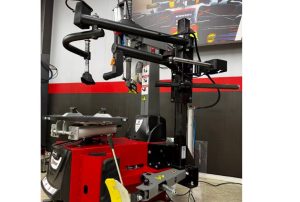 Troubleshoot a Tire Changer Safely
Tire Changer Parts to Inspect Before Ordering
| Part | Why It Matters |
|---|
| Motor and capacitor | Drives turntable rotation and startup torque |
| Rotation switch | Controls forward/reverse table movement |
| Gearbox | Converts motor output into turntable torque |
| Foot pedal valve | Controls air functions and can leak internally |
| Air cylinder seal kit | Restores bead breaker or clamp force |
| Hoses and push fittings | Prevents air pressure loss |
| Water separator/regulator | Keeps air clean and pressure stable |
| Mount/demount head | Protects tire bead and rim surface |
| Jaw clamp covers | Reduces alloy wheel damage |
| Bead breaker blade cover | Protects rim surface during bead breaking |
| Digital gauge battery | Simple fix for blank displays |
Before ordering, record the tire changer brand, model, serial number, supply voltage, air pressure requirement and photos of the failed part. Tire changer parts vary by make and model.
Frequently Asked Questions
Why won’t my tire changer spin?
A tire changer may not spin because of power loss, damaged wiring, failed capacitor, bad rotation switch, motor failure or gearbox seizure. Start with power and visible wiring, then check whether the motor turns freely when isolated. If the motor circuit or gearbox is suspect, call service.
Why is my bead breaker not working?
The most common causes are incomplete tire deflation, low incoming air pressure, air leaks, worn cylinder seals, poor lubrication or bead breaker arm misalignment. Remove the valve core and fully deflate the tire before bead breaking.
Why is my tire changer scratching rims?
Rim scratches usually come from worn metal contact points, missing plastic protection, poor tire lubricant or incorrect setup. Use plastic mount/demount heads, jaw covers, bead breaker covers and correct clearance.
Why are the pedals weak or leaking air?
Weak pedals often come from foot valve leaks, loose air lines, low air pressure, dirt in the pedal assembly or worn seals. Disconnect power and air before opening the machine. If the leak continues after tightening fittings, replace the valve or seal kit.
What air pressure does a tire changer need?
Many shop tire changers need stable compressed air in the range specified by the machine manual. Some troubleshooting guides mention about 8 bar as a minimum for certain machines, but you should follow your exact model. Low air pressure reduces bead breaker and clamp force.
When should I replace the tire changer instead of repairing it?
Replacement may be more practical when the machine is 8-12 years old, parts are discontinued, the motor and gearbox are both failing, or repeated repairs cause too much downtime. Compare repair cost, safety risk and daily shop revenue loss before deciding.
Related Shop Equipment Maintenance
Tire changers are mostly electric and pneumatic machines, while car lifts and service platforms often use hydraulic power units. For related shop equipment topics, see Hydrath’s car lift hydraulic pump and AC hydraulic power pack resources. Keep the links natural: the goal is broader shop uptime, not forcing a hydraulic product into every tire changer fault.
Closing
Good tire changer troubleshooting starts with safety isolation, not parts guessing. Check air supply, power, pedals, turntable movement, bead breaker action and rim protection parts in a clear order. If the issue involves internal wiring, motor failure, gearbox noise, cylinder leakage or unsafe inflation, stop the job and call a technician. A tire changer that works smoothly protects wheels, saves technician time and keeps the shop moving.