
Features
Single-Acting Hydraulic Cylinders
Single acting hydraulic cylinders deliver pressure‑driven extension with gravity or spring return, simplifying circuits and reducing cost.
- Simplified circuits: Pressure extend, gravity/spring return reduces complexity.
- Durable build: Honed tubes and hard‑chrome rods for long service life.
- Seal options: NBR, Viton (FKM), PTFE matched to fluid and temperature.
- Mounting choices: Clevis, foot, flange to fit lifts.
Single-Acting Hydraulic Cylinder OEM Requirements
We engineer single acting cylinders around your duty cycle and envelope.
Documented testing, ISO/DIN alignment, and factory‑direct quotations ensure predictable schedules.
Gravity or spring return options simplify circuits and lower system cost.
Documented testing, ISO/DIN alignment, and factory‑direct quotations ensure predictable schedules.
Gravity or spring return options simplify circuits and lower system cost.
| Specification | Typical Range/Value |
|---|---|
| Pressure (Bar/PSI) | 160–250 bar (2320–3625 psi) |
| Bore Size (mm) | 25–150 mm typical |
| Rod Diameter (mm) | 12–80 mm typical |
| Stroke (mm) | 200–1500 mm; longer on request |
| Return Method | Gravity or spring return |
| Mounting | Clevis, Foot, Flange |
| Port Thread | BSPP or NPT |
| Seals | NBR (−20–+80°C); FKM/Viton optional to +120°C; PTFE |
| Medium | Mineral oil ISO VG 32/46; water‑glycol on request |
| Temperature Range | Standard −20 to +80°C; optional −40 to +120°C |
| Speed | Recommended 0.5–60 m/min; cushions for >18 m/min at stroke end |
| Standards | ISO 6020/6022 alignment, DIN 24333, ISO 3320 |
| Surface & Finish | Rods hard‑chrome ≥20 µm; tubes honed Ra ≤0.4 µm |
| Testing | Pressure test 1.3× rated; dimensional inspection certificate |



Application
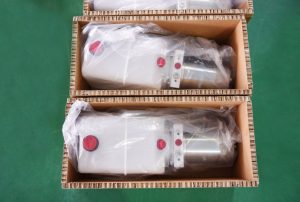
Hydraulic Power Packs Applications


Agriculture & livestock
- Lifting
- Feeding
- Rural automation systems

Meet Us on The Trade Show
Hydrath attends exhibitions worldwide every year:
Hannover Messe
PTC ASIA
Bauma CHINA
You are welcome to book a visit to our exhibitions.
How does a single acting hydraulic cylinder operate?
Pressure‑driven extension; gravity or spring return.
Simplified circuit: fewer valves, lower cost, easier maintenance.
Best for lifting, clamping and compaction where controlled extension is required.
Add end‑of‑stroke cushioning if cycle speeds are high.
When should I use gravity return vs spring return?
Gravity return: vertical loads with sufficient mass.
Spring return: varying orientations or fast retraction without external load.
Selection: match spring rate to stroke and target speed; verify installation envelope.
What mounting suits balers and tail‑lifts?
Clevis: tolerates minor misalignment on moving frames.
Foot/Flange: adds base rigidity for fixed structures.
Check stroke clearance, guides and pin centers to avoid side‑loads on the rod.
Which seals fit single acting cylinders under different temperatures?
NBR: −20 to +80°C with mineral oils; cost‑effective baseline.
FKM/Viton: up to +120°C; improved high‑temperature resistance.
PTFE/PU elements: better wear and extrusion resistance.
Water‑glycol: confirm compatibility and adjust speed/temperature limits.
How to size bore and rod for required thrust?
Calculate thrust: F1 = π/4·D²·P; retraction: F2 = π/4·(D²−d²)·P.
Check buckling: Wa = Pk/S with S≈1.5–2.5; validate support conditions.
Minimize side‑loads; add cushioning for high stroke‑end speeds.
How does meter‑out control affect single acting retraction?
Stabilizes gravity‑return speed via controlled return restriction.
Trade‑offs: higher temperature and back‑pressure if over‑restricted.
Select valve size and confirm load direction to prevent cavitation and vibration.
What valves suit single acting cylinder circuits?
- Relief valve: protects the circuit against over‑pressure.
- Check valve: prevents back‑flow and maintains directional control.
- Flow control: sets descent speed; meter‑out for gravity return.
- Counterbalance valve: load‑holding and controlled lowering; avoids free‑fall.
How to size springs for single acting cylinder return?
- Force: overcome friction and residual loads throughout the stroke.
- Rate: match stroke length and target retraction speed.
- Pre‑load: avoid coil bind; verify temperature and duty cycle stability.
How do I prevent cavitation during gravity return?
Hose sizing: ensure adequate oil supply on return.
Avoid excessive meter‑out restriction that induces low‑pressure zones.
Use counterbalance valves for heavy loads; consider vented caps if needed.
Optimize pump/tank placement to minimize air ingestion.
Which dimensional standards ensure interchangeability?
- ISO 3320: cylinder and rod‑end dimensions.
- ISO 6020/6022: mounting interfaces and envelope sizes.
- Benefits: easier replacement, maintenance and OEM integration.
Get an Instant Quote Now
RELATED
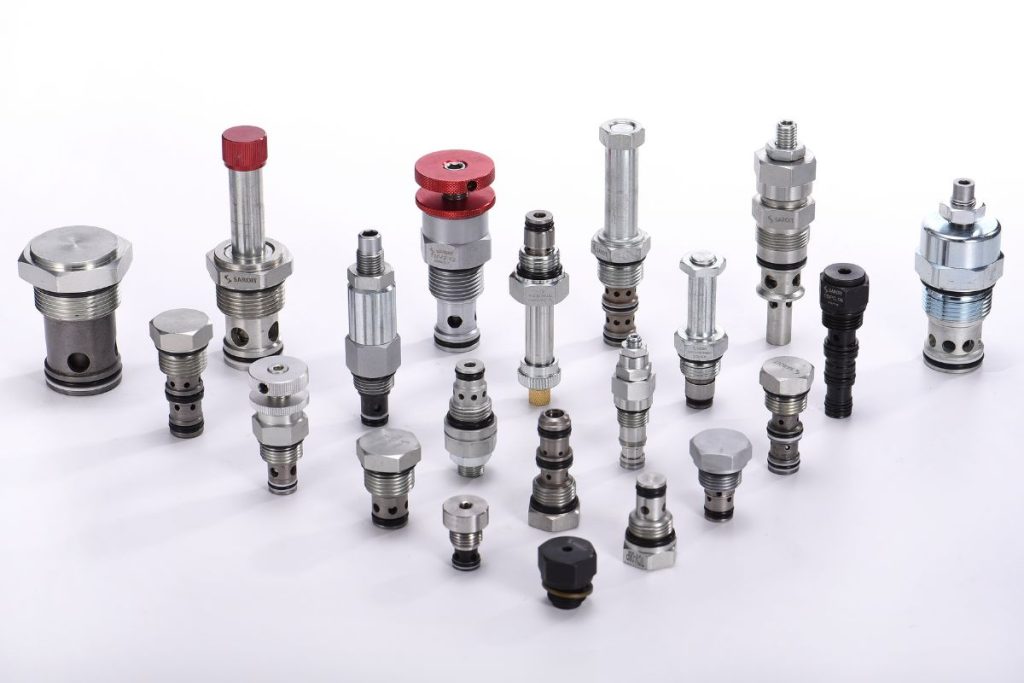
Related Hydraulic Components



Looking for Reliable Hydraulic Solutions?
Let Our Engineering Experts Support You – Anytime.