
Lift Table Power Units
- AC/DC voltage options: Match fixed workshops or mobile battery lifts.
- Integrated manifold block: Fewer fittings, leaks, and faster assembly.
- Compact tank choices: Plastic or steel, vertical/horizontal mounting.
- Solenoid lowering valve: Smooth, repeatable lowering speed adjustment.
Your Reliable Lift Table Power Unit China OEM Supplier
Hydrath delivers Lift Table Hydraulic Power Units designed around real application targets—platform load, lift speed, duty cycle, and power up/gravity down control requirements.
Every hydraulic power pack is assembled with a stable gear pump, matched motor, and service-friendly manifold layout, then verified on test benches for pressure, flow, and functional performance. Select AC 110V/220V/380V for factory lift tables, or DC 12V/24V for battery-powered scissor lift tables and mobile lifts.
From port sizing to tank material and control options (pendant/remote), we keep your integration clean and your lowering motion repeatable.
| Item | Typical Specification |
|---|---|
| Application | Lift tables, scissor lift platforms, material handling lifts |
| Power supply | DC 12V / 24V, or AC 110V / 220V / 380V (project-dependent) |
| Motor power | Typically 0.8–2.2 kW (DC/AC options available) |
| Pump type | High-pressure gear pump |
| Flow rate | Typically 2–15 L/min (matched to speed and cylinder size) |
| Max working pressure | Typically up to 200–210 bar (relief valve set per application) |
| Circuit options | Power up / gravity down (single-acting), power up / power down (double-acting) |
| Valve functions | Relief valve, check valve, solenoid lowering valve, flow control (as required) |
| Reservoir | Plastic or steel; commonly 3–20 L (custom sizes available) |
| Mounting orientation | Vertical or horizontal mounting (design-dependent) |
| Port options | Common options include G1/4, G3/8, M14×1.5 (customizable) |
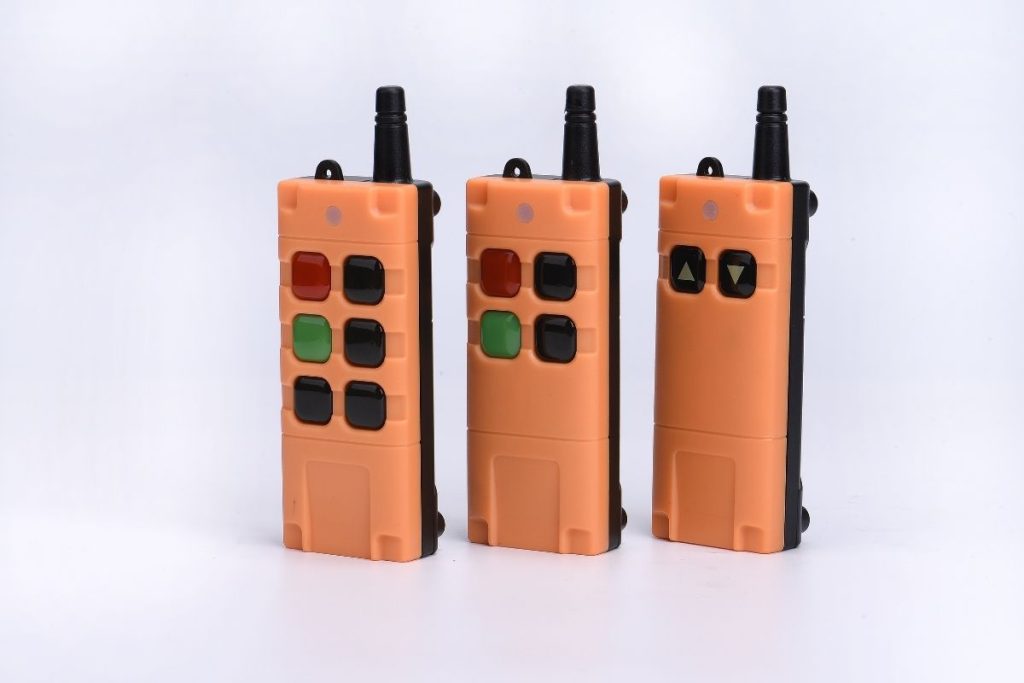
| Control | Pendant/remote switch, push buttons, or control panel (optional) |
| Duty cycle | Typically intermittent duty for compact power packs (per motor rating) |
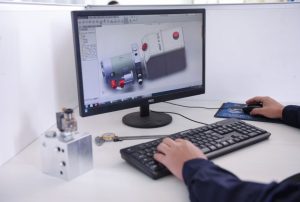
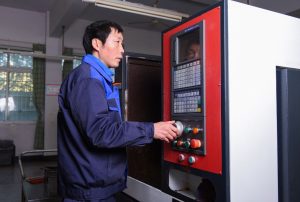
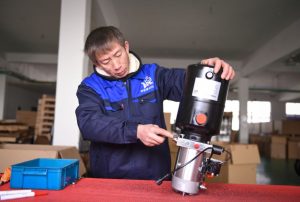
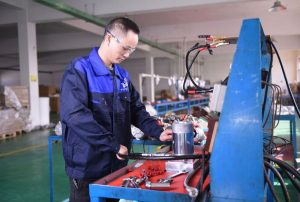
Hydraulic Power Packs Applications


Agriculture & livestock
- Lifting
- Feeding
- Rural automation systems

Meet Us on The Trade Show
Hydrath attends exhibitions worldwide every year:
Hannover Messe
PTC ASIA
Bauma CHINA
You are welcome to book a visit to our exhibitions.
What is a Lift Table Power Unit, and what does it include?
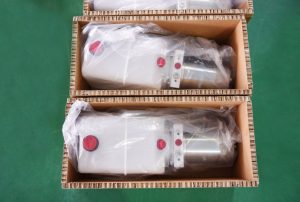
A Lift Table Power Unit (also called a lift table hydraulic power unit or lift table power pack) is an integrated hydraulic power source used to raise and lower lift tables and scissor lift platforms.
Typical assemblies include an electric motor, a high‑pressure gear pump, an oil reservoir (plastic or steel), and an integrated valve manifold with check/relief/directional functions as required.
Should I choose a power up / gravity down power unit or power up / power down?
Most lift table power units are designed for single‑acting cylinders with a “power up / gravity down” circuit.
If your application requires controlled powered descent (or a double‑acting cylinder), then a “power up / power down” configuration is used with the appropriate valve arrangement.
What voltage options are common for lift table hydraulic power units (12V/24V DC vs AC 220V/380V)?
For mobile lift tables and battery-powered scissor lifts, 12V or 24V DC hydraulic power units are common.
For stationary workshop lift tables, AC options (such as 220V/380V) are widely used.
Final selection depends on your site power, duty cycle, and required lift speed.
How is lowering controlled on a lift table power pack?
In many lift table power packs, lowering is managed by a valve solution (often a solenoid valve for lowering) and the lowering speed can be tuned using a flow control/throttle function.
This helps achieve smooth, repeatable descent and improves operational safety.
What pressure range is typical for a scissor lift hydraulic power unit?
Many compact scissor lift hydraulic power unit solutions are specified around the 200–210 bar class (application-dependent), and pressure settings are usually finalized via the relief valve based on load and cylinder sizing.
What should I provide for an OEM quote for a lift table hydraulic power unit?
To quote and configure an OEM lift table hydraulic power unit efficiently, provide:
- required load and platform speed,
- cylinder type (single/double acting) and bore/stroke,
- available voltage (12/24V DC or AC 220/380V),
- desired reservoir size/material,
- mounting orientation,
- Port thread standards.
This ensures the right pump displacement, motor power, and valve manifold functions are selected.
Why does a lift table drift down, and how can the power unit help?
Lift table drifting down is often related to internal leakage in valves/cylinders, or a missing/incorrect check valve arrangement.
A properly configured lift table power unit typically uses check and control valves in the manifold to help hold the load and manage safe lowering.
If drifting occurs, inspect cylinder seals, valve cartridges, and system contamination.
Are plastic or steel reservoirs better for lift table power units?
Both are common. Plastic reservoirs can reduce weight and cost for compact DC lift table power units, while steel tanks are often chosen for durability and certain industrial environments.
The best choice depends on mounting, operating temperature, and site conditions.
What is the benefit of an integrated valve manifold on a lift table power unit?
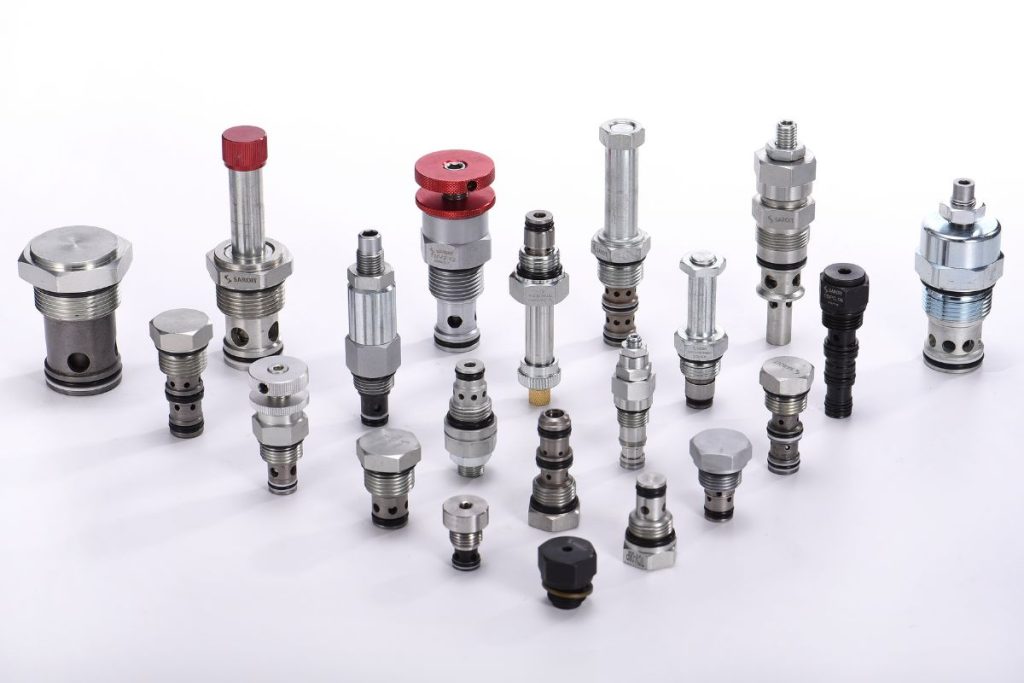
An integrated valve manifold (often using cartridge valves) reduces external hoses and fittings, lowers leak points, and simplifies installation and service.
It also makes it easier to standardize functions such as relief, check, and solenoid lowering control in a compact layout.
Can a lift table hydraulic power unit be customized for different duty cycles and lift speeds?
Yes. Lift table hydraulic power units can be configured by selecting the correct motor rating, pump displacement (flow), reservoir sizing, and valve functions.
For higher cycle rates, it’s important to size for heat and duty cycle to maintain stable performance over daily operation.
Get an Instant Quote Now
Related Component


Looking for Reliable Hydraulic Solutions?
Let Our Engineering Experts Support You – Anytime.