Hydraulic cylinders convert fluid pressure into linear mechanical force. The piston rod transmits this force between the cylinder barrel and the moving load. In mobile equipment—excavators, loaders, dump trucks, and cranes—piston rods face harsh conditions: contamination, impact loads, vibration, and exposure to moisture. These conditions cause predictable failure modes that every technician and engineer should recognize.This article examines five common piston rod problems, their root causes, and practical solutions based on engineering principles and field experience.
What is a Hydraulic Cylinder Piston Rod?
A hydraulic cylinder piston rod is a precision-ground steel shaft that connects the piston inside the barrel to the cylinder’s mount. The rod extends and retracts through seals and bearings, transmitting force to the load. Key specifications include:
- Diameter: 10 mm to 300 mm for industrial cylinders; 20 mm to 100 mm for mobile equipment
- Surface hardness: 50–55 HRC for induction hardened; 60–65 HRC for hard chrome
- Surface finish: Ra 0.2–0.4 μm (0.000008–0.000016 inch)
- Material: AISI 1045, 4140, or 316L stainless for corrosive environments
| Parameter | Common Range | Application Note |
|---|
| Diameter | 10–300 mm | Larger for higher load capacity |
| Chrome thickness | 0.015–0.03 mm | Minimum 0.025 mm for seal life |
| Hardness | 50–65 HRC | Induction hardened or hard chrome plated |
| Surface roughness | Ra 0.2–0.4 μm | Lower values extend seal life |
5 Most Common Hydraulic Cylinder Piston Rod Problems
Problem 1: Improperly Sized Rod
A rod with insufficient diameter suffers from column buckling under compressive loads. Long-stroke cylinders are particularly vulnerable. The Euler formula calculates critical load:
Pcr = (π² × E × I) / L²
Where E = elastic modulus, I = moment of inertia, L = effective length.
Oversizing creates a different problem: reduced retraction force in single-acting or tensile applications. The correct approach matches rod diameter to maximum working pressure, stroke length, and mounting style.
Solution: Select rod diameter using manufacturer catalogs or calculation software. For strokes exceeding 1 meter, consider stop tubes or guide bearings.

 piston rod seal damage
Problem 2: Thread Breakage
Thread failure occurs at the rod-to-piston connection or the rod eye. Root causes include:
- Insufficient thread engagement: Threads shear when engagement length is too short
- Stress concentration: Sharp fillet radii at thread root increase stress
- Material mismatch: Dissimilar metals cause galvanic corrosion in wet conditions
- Over-tightening: Exceeding recommended torque damages thread flanks
Machining quality matters. A thread with a 0.2 mm fillet radius at the root reduces stress concentration by 40% compared to sharp roots.
Solution: Specify thread specifications matching the application. Use rolled threads for higher strength. Apply proper torque values from manufacturer data.
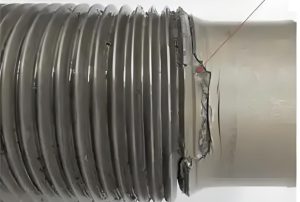 rod thread breakage hydraulic
Problem 3: Scratches Leading to Seal Damage
Surface scratches compromise the rod seal and wiper seal function. Contamination enters the system, accelerating wear on both seals and bore. Common scratch causes:
- Contamination during assembly: Dirt or debris on the rod before installation
- Cylinder rod contact with debris: Particles caught between rod and gland
- Improper handling: Dropping or impacts during maintenance
The rule: any scratch visible to the naked eye likely damages seals. Chrome plating (minimum 0.025 mm thickness) provides a hard, smooth surface that resists scratching and protects the underlying steel.
Solution: Inspect rods before assembly. Use clean rags and compatible cleaning fluids. Apply corrosion inhibitors for storage. Replace rods with deep scratches or chrome wear.
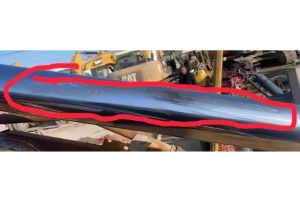 hydraulic cylinder rod scratch
Problem 4: Corrosion of Rod Thread
Chrome plating protects the rod body but is often removed at threaded sections during machining. The bare steel underneath corrodes in humid or chemically aggressive environments. Chlorides (salt water, de-icing salts) accelerate pitting corrosion.
Stainless steel rods (AISI 316L) resist corrosion without plating. However, they cost 3–5 times more than carbon steel with chrome.
Solution: Specify stainless steel for corrosive environments. Apply thread protectors during storage. Use vapor-phase inhibitors in humid storage conditions.
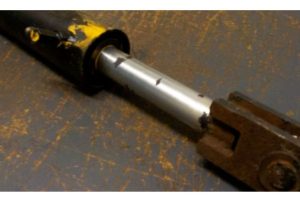 hydraulic cylinder rod corrosion
Problem 5: Mechanical Damage
Mobile equipment cylinders suffer impact damage from collisions, falling materials, or operational accidents. Excavator boom and arm cylinders are particularly exposed. Damage forms include:
- Bent rods: Causes seal binding and uneven wear
- Dented surfaces: Stress risers lead to fatigue cracking
- Gouges and impact marks: Remove chrome plating, exposing base metal
Repair feasibility depends on damage severity. Minor bends under 0.5 mm over the rod length may be straighten-able. Severe damage requires rod replacement.
Solution: Install rod guards or proximity sensors for high-risk applications. Train operators on cylinder protection. Replace damaged rods promptly to avoid seal failure.
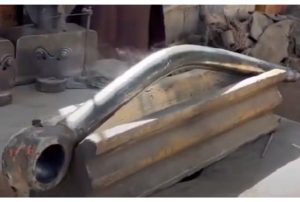 hydraulic cylinder rod bent
Chrome Plated Rod vs Stainless Steel Rod
| Feature | Chrome Plated Rod | Stainless Steel Rod |
|---|
| Material | AISI 1045/4140 + chrome | AISI 316L |
| Surface hardness | 60–65 HRC | 150–200 HB |
| Corrosion resistance | Good (if chrome intact) | Excellent |
| Cost | Standard | 3–5× higher |
| Typical applications | Construction, agriculture | Marine, food processing, chemical |
| Repair options | Re-chrome possible | Grind and polish |
| Maximum temperature | 200°C | 400°C |
Recommendation: Use chrome plated rods for standard mobile and industrial applications where cost and availability matter. Specify stainless steel for marine, offshore, food processing, or chemical processing environments where corrosion resistance justifies the premium.
How to Prevent Hydraulic Cylinder Piston Rod Damage
- Verify Sizing Before Installation: Check manufacturer catalogs for rod diameter recommendations based on maximum pressure, stroke length, and mounting configuration. Use calculation tools or consult engineering support for non-standard applications.
- Inspect Rods During Maintenance: Look for scratches, corrosion, bent sections, and chrome wear. Measure rod diameter at multiple points along the length. Compare against new rod specifications.
- Replace Worn Seals Promptly: Worn seals allow contamination ingress that accelerates rod and seal wear. Replace seals at manufacturer-recommended intervals or when wear is visible.
- Protect Rods During Storage: Apply corrosion inhibitors to bare steel sections. Install thread protectors. Store cylinders horizontally with rod protected.
- Train Operators on Equipment Protection: Educate operators on cylinder positioning, load limits, and collision avoidance. Install rod guards on high-risk equipment.
Frequently Asked Questions
How often should hydraulic cylinder rods be inspected?
Inspect rods during every scheduled maintenance interval. For mobile equipment, this means every 500–1000 operating hours or quarterly, whichever comes first. Inspect after any incident that could cause damage.
Can a bent hydraulic cylinder rod be repaired?
A rod with minor bending (less than 0.5 mm deviation over its length) can sometimes be straightened by a qualified repair shop. Severe bending, kinking, or dimensional loss requires replacement. Always verify straightness tolerance after straightening.
What is the minimum chrome thickness for hydraulic cylinder rods?
Industry minimum is 0.025 mm (0.001 inch) hard chrome. Some manufacturers specify 0.038–0.05 mm for extended service life. Insufficient chrome thickness leads to premature wear and corrosion.
How does rod deflection affect cylinder performance?
Excessive deflection causes seal wear, binding, and reduced efficiency. Calculate deflection using the area moment of inertia method, and verify it remains below manufacturer limits (typically L/1000 for precision applications).
What causes chrome plating to flake off hydraulic rods?
Chrome flaking results from poor adhesion due to surface contamination before plating, improper plating bath chemistry, or excessive bending stress exceeding chrome’s brittle strength. Rods with flaking chrome must be re-chromed or replaced.
Conclusion
Piston rod problems in hydraulic cylinders follow predictable patterns: sizing errors, thread failures, surface damage, corrosion, and mechanical damage. Each has clear root causes and practical solutions. By understanding these failure modes, technicians can diagnose problems faster, and engineers can specify components that last longer in demanding applications.
For mobile equipment operators, regular inspection and prompt seal replacement prevent most piston rod problems from escalating. For system designers, proper sizing and material selection reduce field failures and maintenance costs.