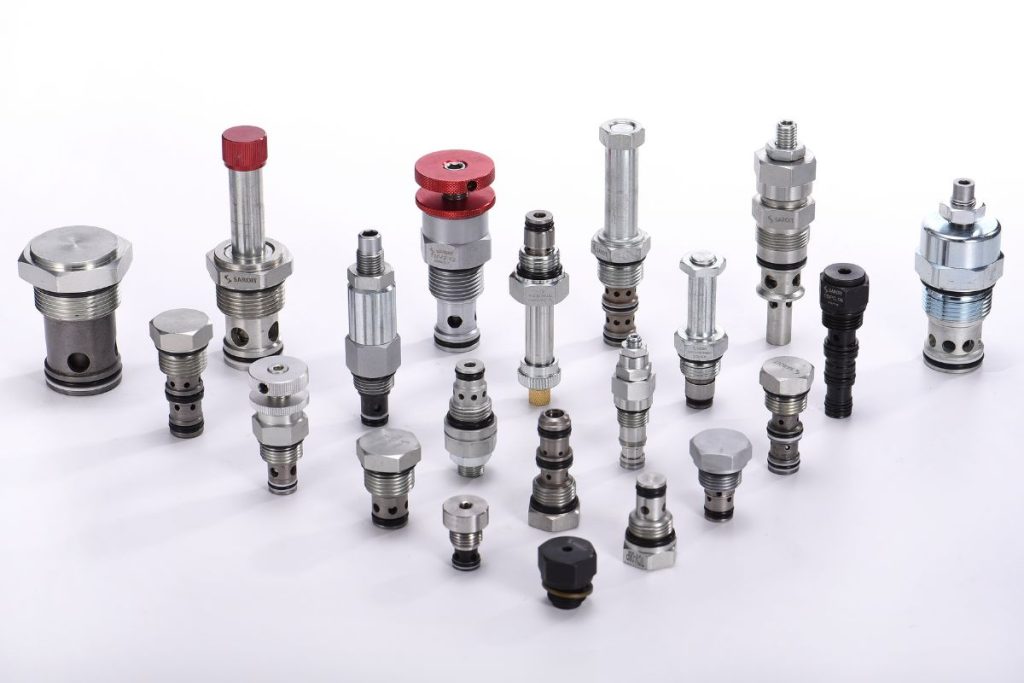
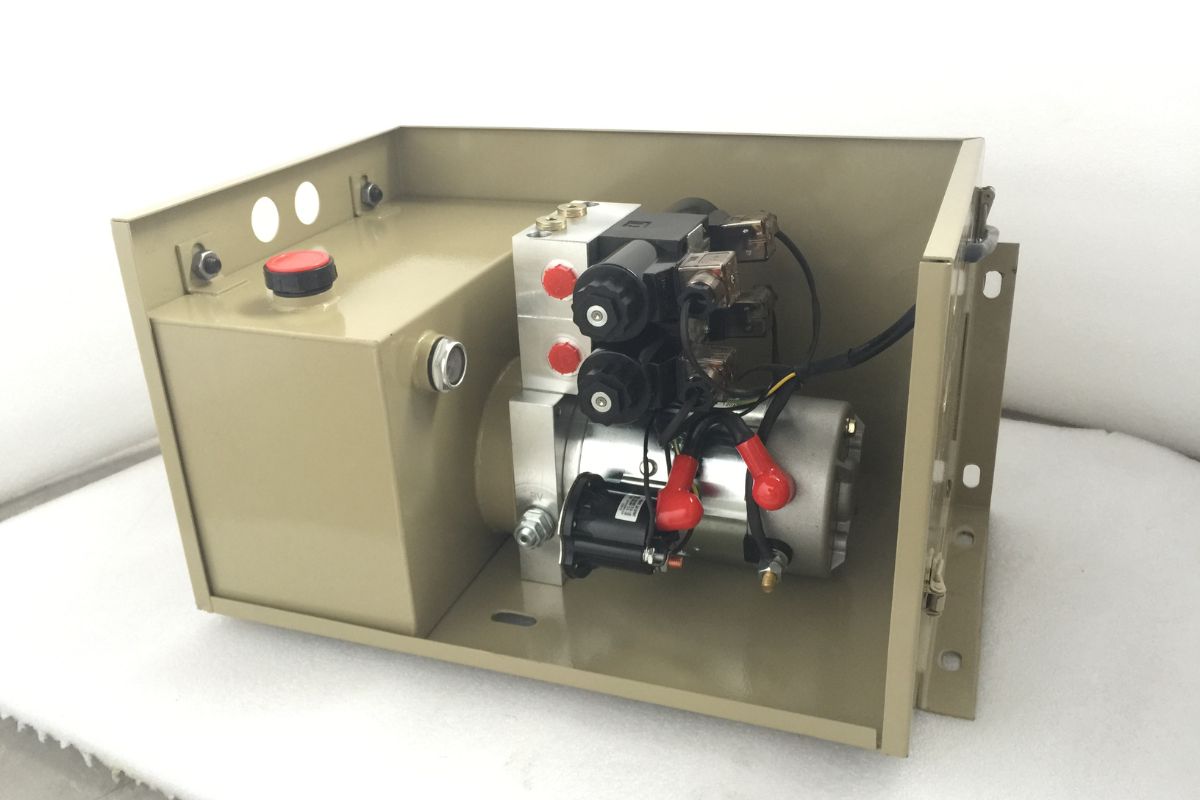
Tail Lift Power Pack
- Compact design: Confirm chassis space, mounting points and service access.
- Stable lifting control: Specify lift and lower movement times under the intended load.
- Multiple voltage options: Confirm the vehicle supply before selecting 12V, 24V or 48V DC motors.
- Service-friendly manifold: Review valve access and the required maintenance clearances.
- Lowering circuit review: Confirm load holding and fault response for the complete lift circuit.
OUR PRODUCT
CUSTOM TAIL LIFT POWER PACK

12V Tail Lift Power Pack
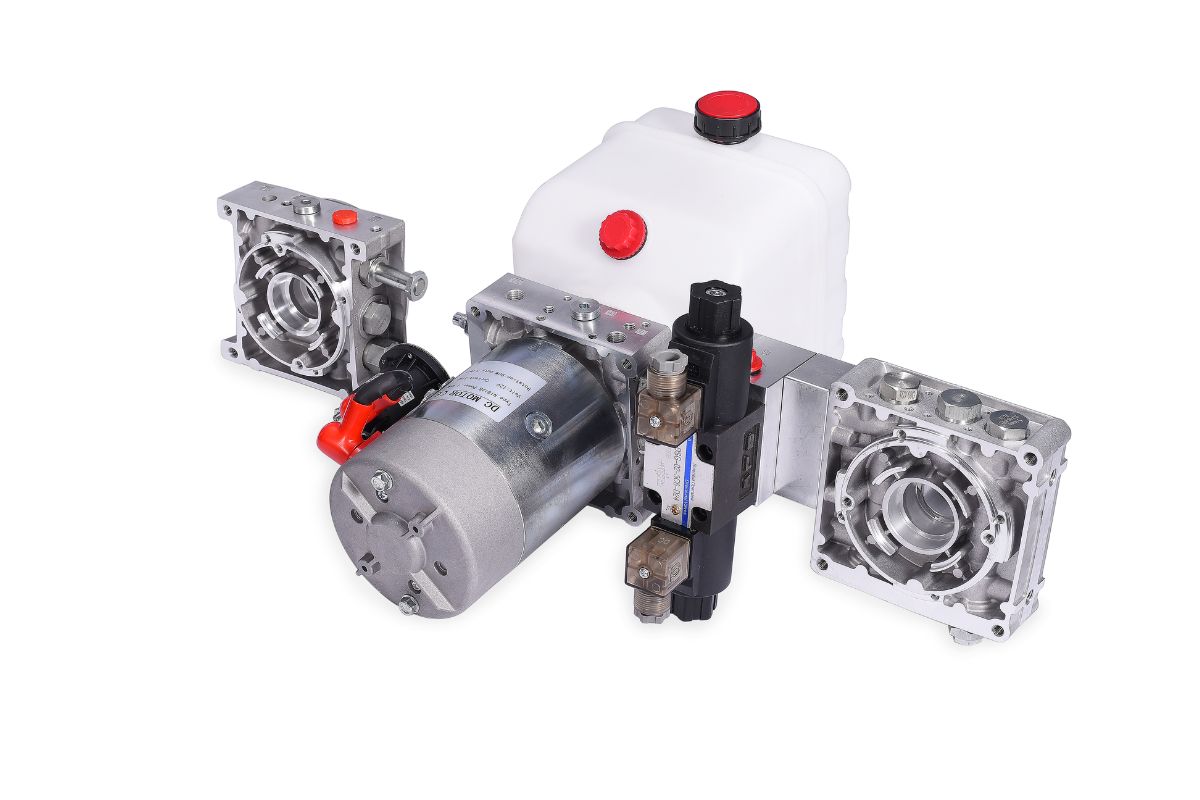
A 12V tail lift power pack delivers dependable lift and lower motion for vans and light trucks using the vehicle battery. Typical setups pair a 1.6–2.1 kW DC motor with a compact gear pump, relief valve, and 3–8 L reservoir. Common pressure is 160–210 bar. Ideal for delivery fleets, refrigerated vans, and service vehicles.
24V Tail Lift Power Pack
Designed for higher duty mobile systems, a 24V tail lift power pack offers faster cycles and strong torque in cold starts. Typical motors run 2.0–3.0 kW with intermittent S2/S3 ratings, matched to gear pumps delivering about 4–16 LPM. Choose horizontal or vertical tanks from 4–10 L. Used on medium trucks, tailgates, and logistics platforms.
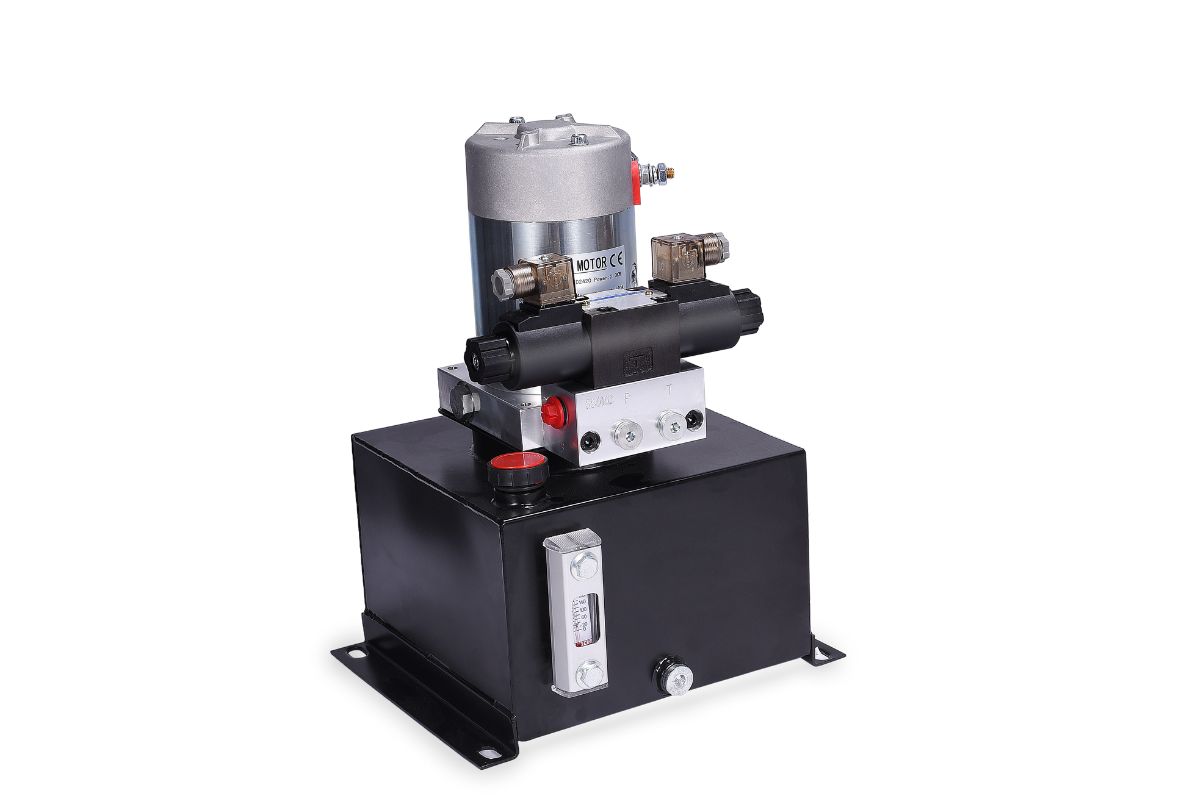
48V Tailgate Power Pack
A 48V tailgate power pack supports modern electric vehicles and heavy tailgate systems where higher voltage reduces current and cable size. Common designs combine a low-noise high-pressure gear pump with a multifunction manifold, shut-off or 3/2 solenoid valves, and adjustable lowering control. Expect 180–230 bar capability and customizable reservoirs. Great for refuse trucks, municipal fleets, and e-trucks.
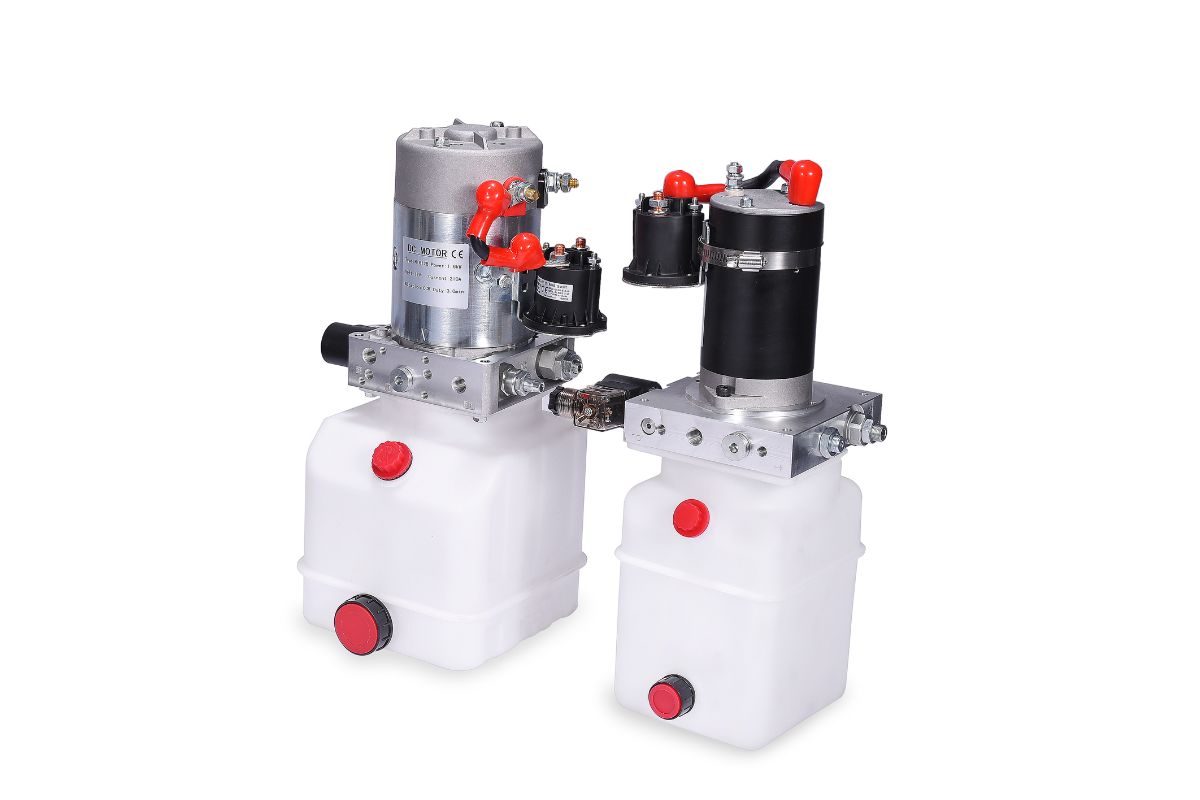
Duty Cycle S3 Hydraulic Power Pack
A duty cycle S3 hydraulic power pack is built for intermittent operation, perfect for tail lifts that run in short bursts. S3 ratings (often 10% ED) help protect DC motors from overheating while maintaining high power density. Configure motor voltage 12/24/48V, pressure up to ~210 bar, and flow to match cylinder speed. Common in liftgates, dock ramps, and mobile platforms.
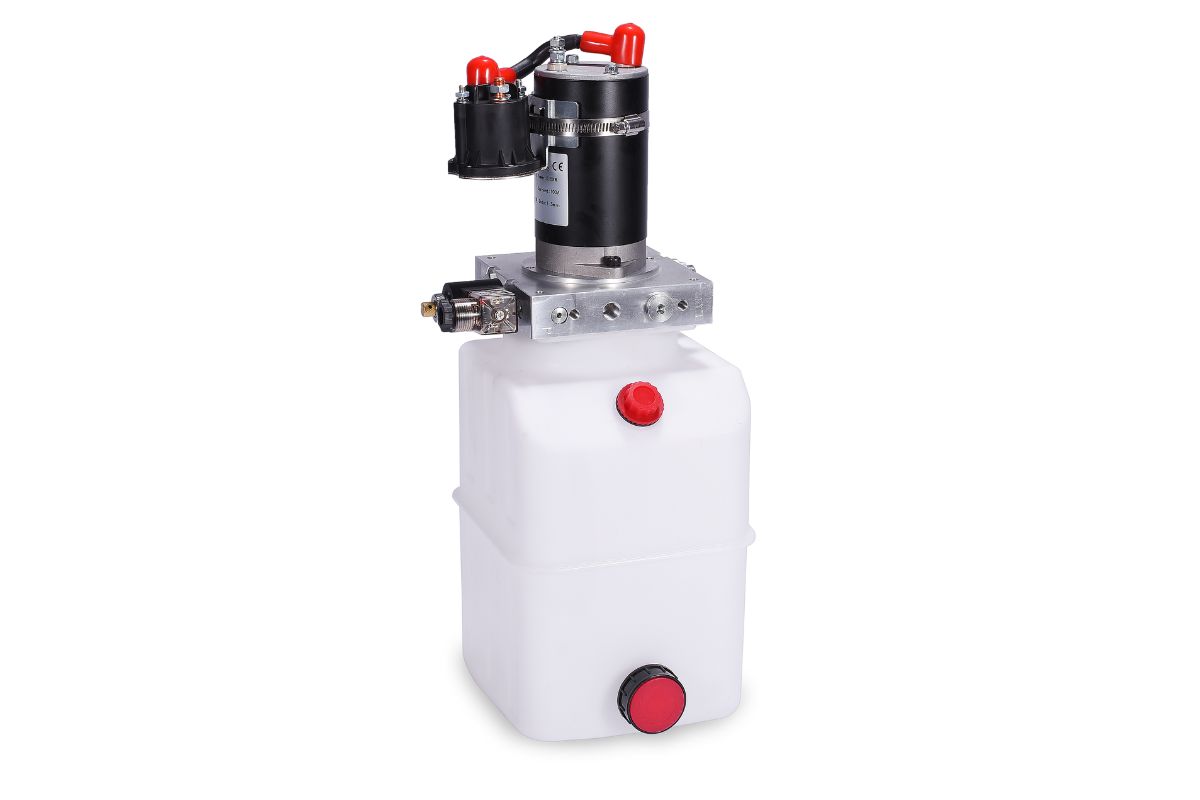
Power Up Gravity Down Tail Lift Power Pack
A power up gravity down tail lift power pack is a cost-effective, widely used circuit for truck liftgates. The DC motor drives a gear pump to raise the platform; lowering happens by controlled valve opening and the load’s weight, often with a one-way flow control to tune descent speed. Typical options include 12/24V, 3–8 L tanks, and 160–210 bar settings.
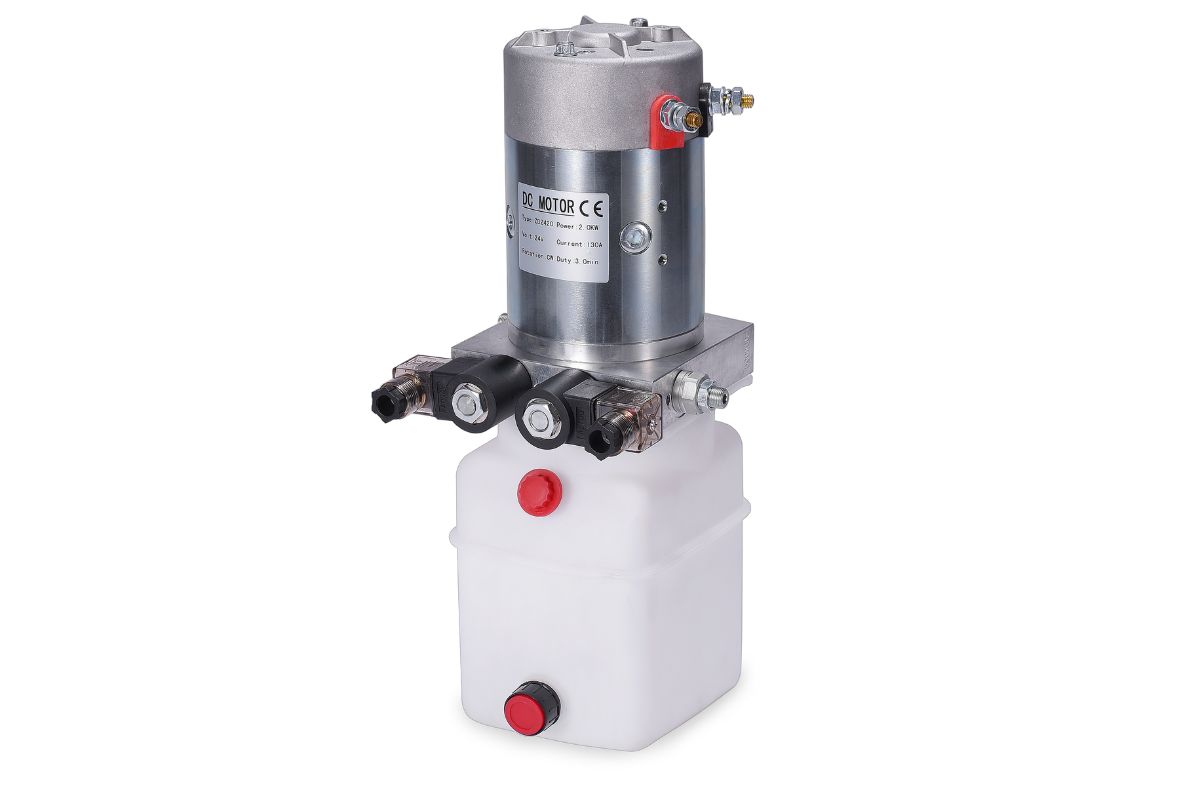
Power Up Power Down Tail Lift Power Pack
A power up power down tail lift power pack controls lifting and lowering with hydraulic power in both directions, delivering smoother descent and better load safety. It commonly uses a solenoid directional manifold, relief valve, and gear pump matched to the cylinder. Typical selections are 12V or 24V motors, 4–10 L reservoirs, and pressure up to ~210 bar for liftgates.
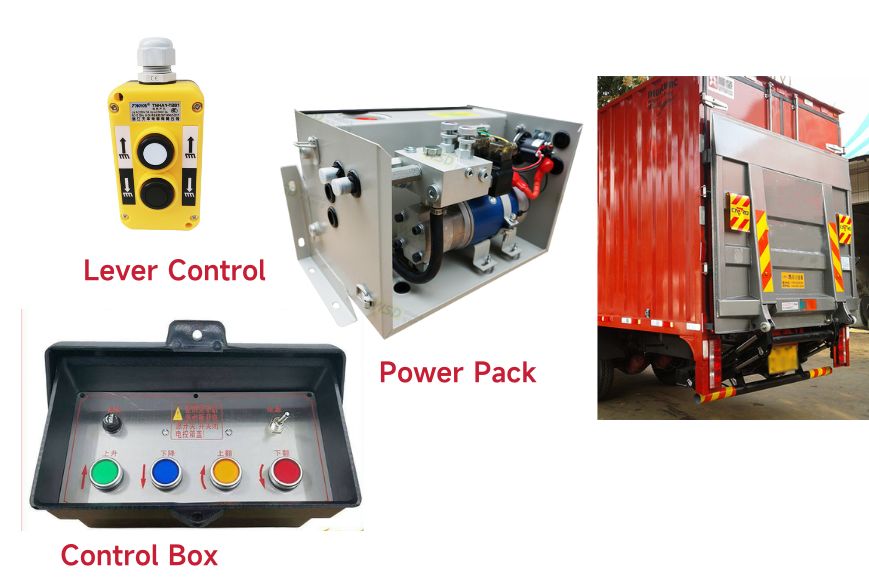
Your Reliable Tail Lift Power Pack Manufacturer & China OEM Supplier
A tail lift power pack supplies hydraulic flow to move a vehicle’s loading platform through its specified cylinder and valve circuit. HydrathPower reviews the platform load, cylinder arrangement and chassis layout before confirming a configuration.
For an OEM tail lift hydraulic power pack, confirm voltage and motor duty: 12V or 24V DC or another specified vehicle supply. Provide target lift time, lowering behavior and the required run/rest cycle alongside the cylinder details.
For a custom tail lift power unit or replacement tail lift power pack, send the circuit drawing, component labels, mounting dimensions and port information. Confirm compatibility and acceptance requirements before ordering.
| Item | Specification & Options |
|---|---|
| Voltage | 12V / 24V / 48V DC, other OEM voltages on request |
| Motor & Duty | 1.6–3.0 kW DC motor, S2 short-time or S3 intermittent (typ. S2 3 min, S3 10% ED) |
| Pressure | 160–210 bar standard working pressure, up to 250 bar for special circuits |
| Pump & Flow | High‑pressure gear pump, approx. 4–16 L/min, sized to required cylinder speed and load |
| Tank & Mounting | 3–10 L reservoir, steel or plastic, horizontal or vertical mounting with custom brackets |
| Circuit & Valves | Single-acting (Power up/gravity down) or Double-acting (power up / power down), normally closed, lowering valve with flow control |
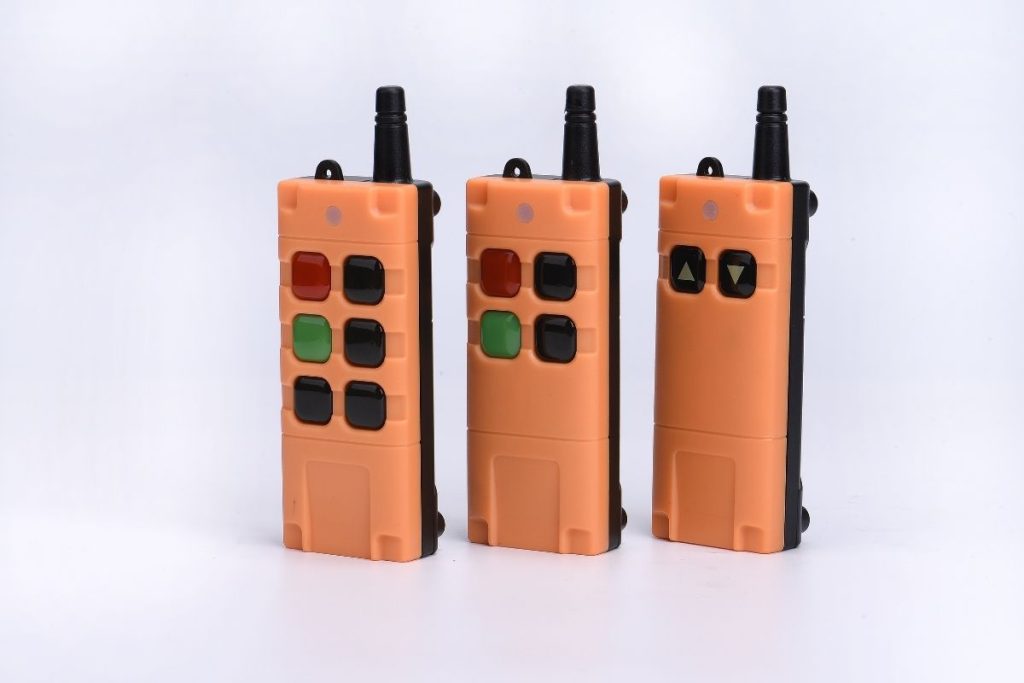
| Control & Ports | Wired remote or switch control, optional wireless remote, BSPP/NPT ports with customizable positions |
| Oil & Environment | Mineral oil ISO VG 32/46, typical -20°C to +60°C, IP44/IP54 protection, higher ratings available |
More Than Just a Tail Lift Power Pack

Meet Us on The Trade Show
Hydrath attends exhibitions worldwide every year:
Hannover Messe
PTC ASIA
Bauma CHINA
You are welcome to book a visit to our exhibitions.
What is a Tail Lift Power Pack, and where is it used?
A Tail Lift Power Pack (also called a tail lift hydraulic power unit) is a compact electro-hydraulic system that powers truck liftgates/tailgates for lifting and controlled lowering.
It’s widely used on delivery trucks, refrigerated vans, service vehicles, and logistics platforms where space is limited but reliable daily cycles are required.
Should I choose a 12V tail lift power pack or 24V tail lift power pack?
Choose a 12V tail lift power pack for light vans and smaller liftgates powered directly by the vehicle battery, typically with intermittent duty motors.
Choose a 24V tail lift power pack for larger vehicles or faster cycling needs; 24V systems often support higher motor power and lower current for the same output, improving stability under frequent operation.
What does duty cycle S3 mean for a hydraulic power pack?
Duty cycle S3 hydraulic power pack indicates intermittent periodic duty (run/rest cycles). Many DC power units are compact with high power density, so S3 limits continuous running time to prevent overheating.
Selecting the right S3 rating helps maintain stable tail lift performance during repeated loading/unloading cycles.
Power up gravity down vs power up power down—what’s the difference for a tail lift power pack?
A power up gravity down(single-acting) tail lift power pack uses pump power to lift, then lowers by load weight through a controlled valve path—simple and cost-effective.
A power up power down (double-acting)tail lift power pack powers both lifting and lowering for smoother descent control, better behavior under varying loads, and improved operational safety when precise lowering is required.
Why use a normally closed lowering valve tail lift system?
A normally closed lowering valve describes the specified default state of the valve. Check its schematic and operating conditions as part of the tail lift circuit.
This designation alone does not verify load holding, power-loss behavior or the lift’s safety functions. Those require system-level assessment and testing.
Specify the lowering speed and have the complete flow-control arrangement verified under the intended load.
What specifications are typical for a tail lift power pack (pressure, flow, tank)?
Typical selections depend on platform size and cylinder speed. In common DC power pack catalogs, you’ll see motor options like 12V/24V with intermittent duty, pressures often set around 160–210 bar, and practical flow ranges sized for smooth lift cycles.
Reservoir volume is frequently chosen in the 3–10 L range with horizontal/vertical mounting options.
Can I order an OEM tail lift hydraulic power pack or a custom tail lift power unit?
Yes—an OEM tail lift hydraulic power pack is commonly customized by:
- voltage (12V/24V/48V),
- manifold function (single acting/double acting, gravity down/power down),
- tank volume/material,
- port thread type (e.g., BSPP/NPT),
- control method (wired or remote).
Sharing your liftgate circuit and installation space helps finalize a reliable build.
How do I choose a replacement tail lift power pack without downtime?
For a replacement tail lift power pack, confirm motor voltage, duty cycle, mounting orientation, tank capacity and manifold function against the original equipment documentation.
Provide label and valve-block photos together with the circuit drawing, port threads and hose routing. Photos alone do not establish a like-for-like replacement; hydraulic and electrical compatibility need confirmation.