Features

Hydraulic Directional Valves

  • Max operating pressure: 207 bar in aluminum bodies; up to 350 bar in steel/ductile iron bodies.
  • Temperature: −40 to +120°C for standard sealing packages.
  • Internal leakage: ≤ 3 drops/min at rated pressure for seat‑type checks.
  • Flow capability: sized by cavity and port (e.g., 06‑2 / 08‑2 / 10‑2 / 12‑2) with curves available for selection.
  • Cavity coverage: 08‑2 / 10‑2 / 12‑2 (2/2 poppet/check); 08‑3 / 10‑3 (3/2 spool); 08‑4 / 10‑4 (4/2 / 4/3 spool)
  • Coil options: 12/24 VDC, 110/220 VAC; duty 85–115%
  • Ports: SAE (4T / 6T / 8T / 10T / 12T) and BSPP (G1/4 / G3/8 / G1/2 / G3/4 / G1)
  • Manifold‑ready: ISO 4401/CETOP interface for spool assemblies; inline bodies available

Hydraulic Directional Valves for Circuit Integration

When sourcing a hydraulic directional valves manufacturer and supplier, you typically want stable quality, consistent performance, and clear technical support—not guesswork.

With Target Hydraulics in China, you get directional valves made with sturdy, durable materials and a manufacturing approach aimed at high precision, efficient flow routing, and reliable service life. If your machine has unique constraints, you can request a customized solution so key parameters align with your application rather than forcing compromises in installation or performance. Selection support stays practical, helping you match control type, circuit function, and working conditions to the right valve specification.

Share your drawings or requirements, and you can request a quote with a clear, workable proposal.

Various Types of Hydraulic Directional Valves

Air-operated Hydraulic Directional Control Valve

Air-operated Hydraulic Directional Control Valve

With an air-operated directional control valve, compressed air moves the spool so flow direction switches quickly and efficiently. When you’re checking specs, the key parameters are the control type (air-operated) and the listed compliance/certification claims, such as ISO 4413, ISO 6403, and CE. It’s commonly used on agricultural machines and packaging-sector equipment.

Electric Hydraulic Directional Control Valve

Electric Hydraulic Directional Control Valve

Here the spool is driven by an electric motor, so remote control and automation are easier to build into your system. Typical parameter checks include the actuation method (electric motor) and the certifications the supplier lists, such as ISO 6403, ISO 4413, and CE. You’ll often see it on construction equipment like cranes and tower cranes.
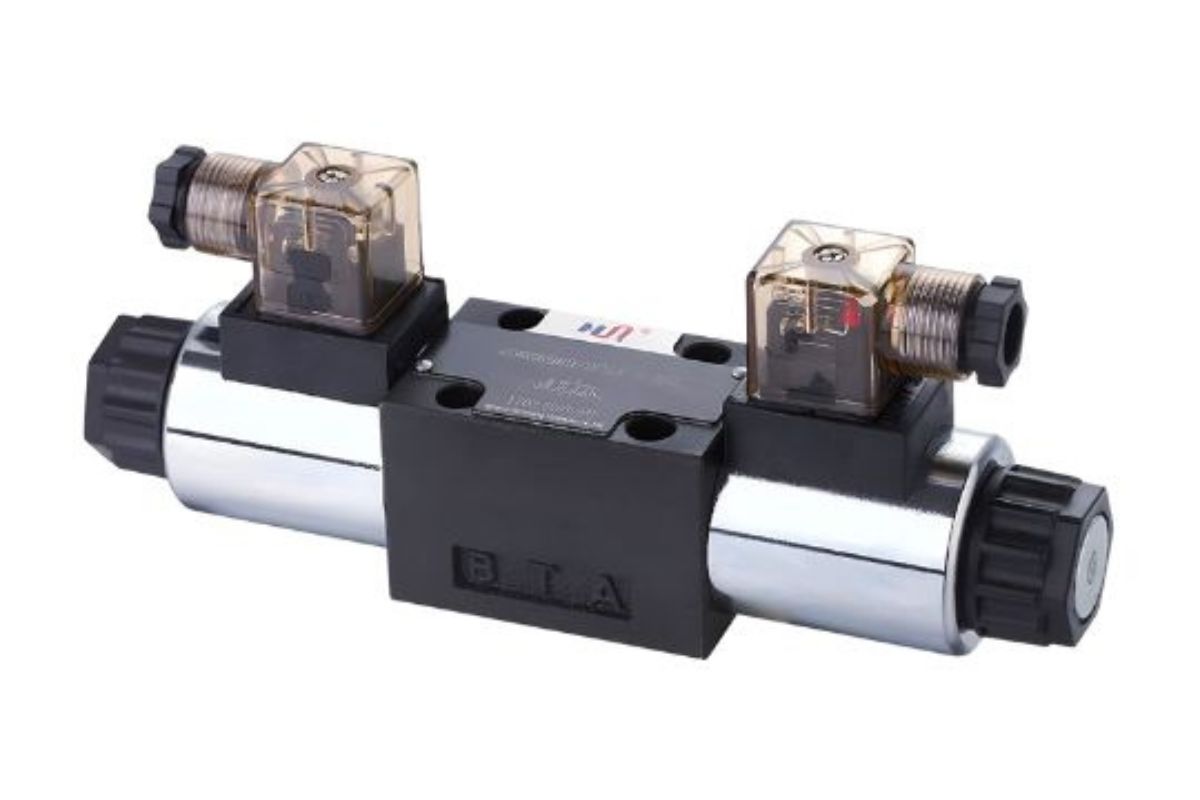
Solenoid Hydraulic Directional Control Valve

Solenoid Hydraulic Directional Control Valve

A solenoid directional control valve shifts the spool with a solenoid, which keeps the structure simple and makes automation straightforward—even in tougher environments. When you screen parameters, focus on actuation type (solenoid) and the stated compliance marks like CE, UL 2231, and ISO 6403. It’s commonly used on cars, forklifts, and trucks.
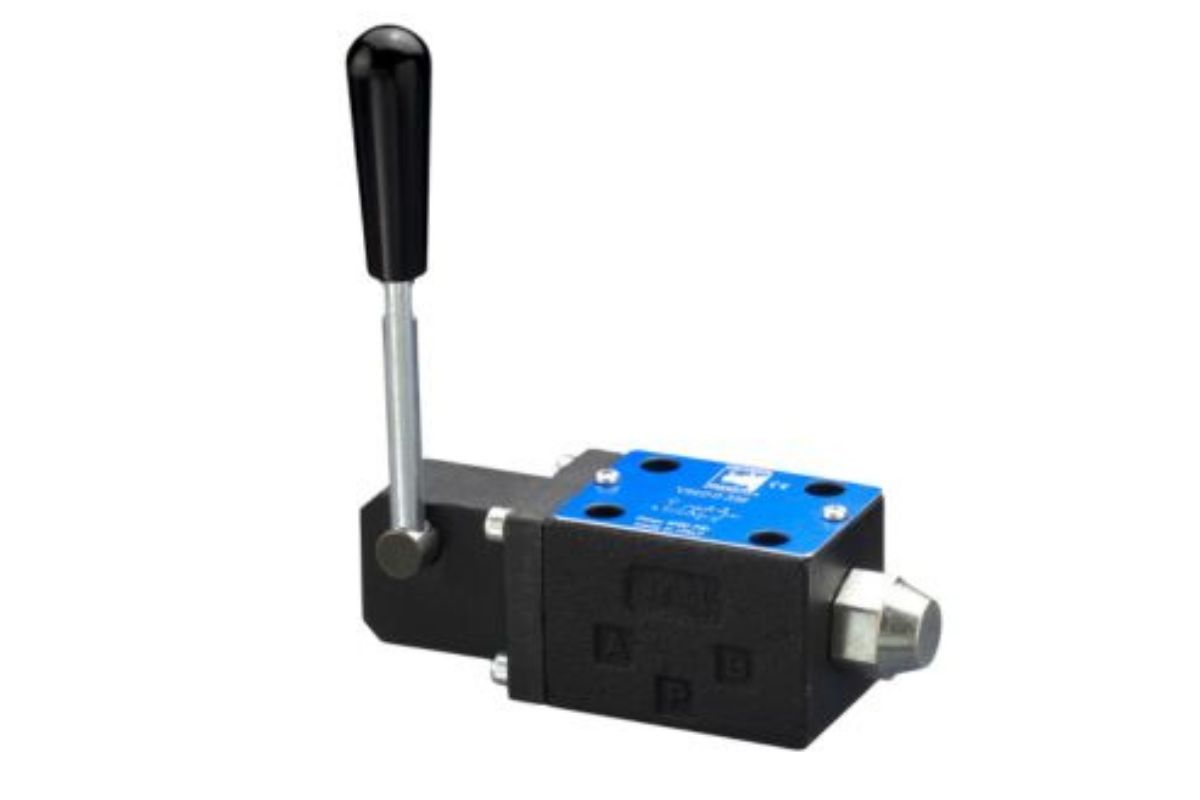
Lever-operated Hydraulic Directional Control Valve

Lever-operated Hydraulic Directional Control Valve

If you want hands-on control, a lever-operated directional valve lets you move the joystick/lever to shift flow without complicated electronics. The usual parameters to confirm are manual/lever actuation and any listed certifications such as ISO 9001, ISO 6403, and CE. Typical applications include tractors, excavators, and other equipment that benefits from direct operation.

Monoblock Hydraulic Directional Control Valve

Monoblock Hydraulic Directional Control Valve

With a monoblock design, multiple valve sections are integrated to save space and make piping connections simpler. When you review parameters, look for monoblock construction and listed certifications like ISO 4413, CE, and ISO 6403. It’s often applied in small and medium agricultural and industrial machinery.

Pilot-operated Hydraulic Directional Control Valve

Pilot-operated Hydraulic Directional Control Valve

A pilot-operated directional valve uses a pilot pressure signal to shift the main stage, so you get actuation with smaller operating force and better controllability. The typical parameters to verify are pilot-operated control and listed certifications such as CE, ISO 9001, and ISO 6403. It’s commonly used in large equipment running at high pressure.

Proportional Hydraulic Directional Control Valve

Proportional Hydraulic Directional Control Valve

With a proportional directional valve, changing proportional solenoid current lets you control flow/pressure smoothly—so direction, speed, and stop position can be handled more accurately. Parameter checks usually include proportional control type and certifications like ISO 4413, ISO 9001, and ISO 6403. It’s often used in precision instruments where fine control matters.

Rotary Hydraulic Directional Control Valve

Rotary Hydraulic Directional Control Valve

A rotary directional valve changes flow paths by turning the valve core, which can help with space saving and long service life. Common parameters to check are rotary actuation and listed certifications such as ISO 4413, CE, and ISO 9001. Typical applications range from cranes to trailers that need rotation-related functions.

Hydraulic Directional Valves with Different Spools

  • 3 Spools HydraulicDirectional Valves
  • 4 Spools HydraulicDirectional Valves
  • 5 Spools HydraulicDirectional Valves
  • 6 Spools HydraulicDirectional Valves
  • 7 Spools HydraulicDirectional Valves
Hydraulic Directional Valves with Different Spools
Hydraulic Directional Valves with Different Ways

Hydraulic Directional Valves with Different Ways

  • 2-way HydraulicDirectional Valves
  • 3-way HydraulicDirectional Valves
  • 4-way HydraulicDirectional Valves

Overview

You need dependable control of hydraulic flow paths to start, stop, and reverse actuators safely.

Hydraulic directional valves route pressurized oil to cylinders and motors, define center behavior, and protect your equipment from unintended motion.

Hydrath offers cartridge and manifold solutions in 2/3/4/5‑way circuits, with ISO 4401/CETOP mounting and SAE/metric ports to integrate cleanly into mobile and industrial hydraulic power units.

Operating Principles

  • Direct flow routing: opens or blocks specific passages to guide oil from P to A/B and return to T .
  • Center conditions: set system behavior when neutral—unload pump ( P→T ), hold position (A/B closed), or fully closed.
  • Check and shuttle logic: one‑way control and dual‑source selection ensure safe sequencing and reliable supply switching.
  • Pilot and unloading functions: use pilot pressure to release checks or unload circuits for energy‑efficient standby.

Valve Families (Representative Models)

  • Check valves (steel ball / cone): TCV‑06‑B , TCV‑08‑B , TCV‑08‑P , TCV‑10‑B , TCV‑10‑P , TCV‑12‑P
  • You get low pressure drop forward flow with positive blocking in reverse; cone poppets support lower leakage at high pressure.
  • Shuttle valves (double‑check): TSLV‑08 , TSLV6‑08
  • You can select the higher of two pressure sources to feed a control line or safety circuit.
  • Pilot‑operated check valves: TPCV‑10
  • You lock a cylinder under load and release only with a pilot signal; ideal for holding functions on lifts and booms.
  • Liquid‑controlled unloading valves: TPC6‑08 , TPC2‑10
  • Hydraulic Solenoid Directional Valves
  • Provide on/off and directional control in compact cartridge formats
  • Span poppet and spool families with clear cavity mapping for 2/2, 3/2, and 4/2/4/3 functions.

You unload the main circuit under pilot command to reduce heat and energy consumption in standby.

Porting & Mounting

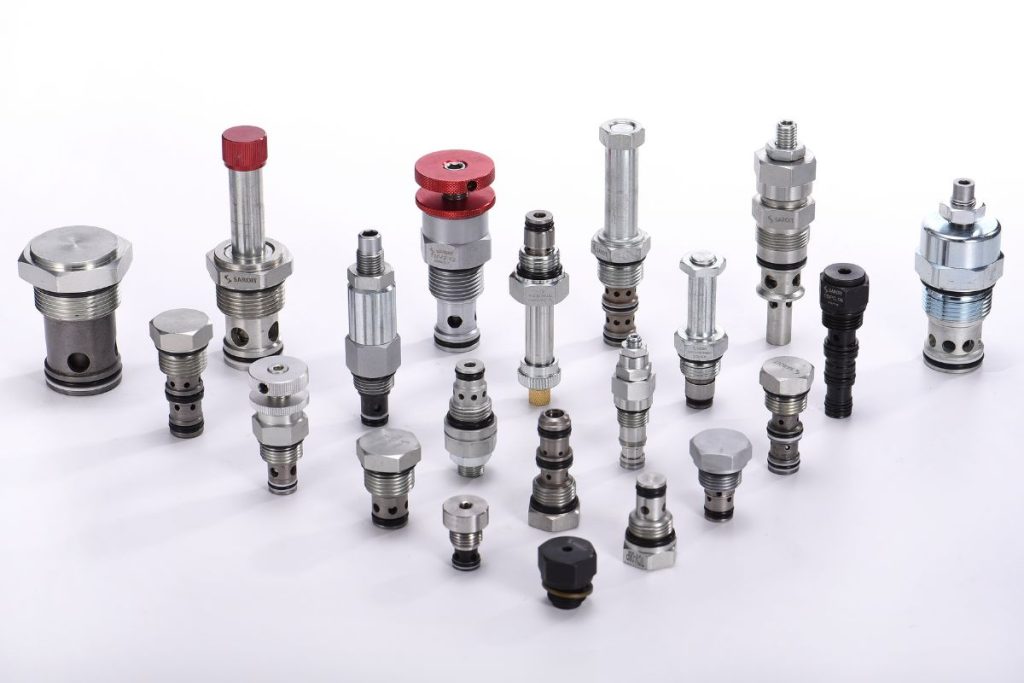
  • Cavities: 06‑2 , 08‑2 , 10‑2 , 12‑2 for screw‑in cartridges; inline bodies available.
  • Ports: SAE (e.g., 4T, 6T, 8T, 10T, 12T) and metric BSPP (e.g., G1/4, G3/8, G1/2, G3/4, G1) for broad compatibility.
  • Manifold standards: ISO 4401/CETOP interface options for spool‑type directional control assemblies.
    Actuation Options
  • 12/24V DC solenoid coils with IP‑rated protection for mobile and industrial environments.
  • Pilot operation for low‑force shifting of main elements at high pressure.
  • Hand lever actuation for simple, robust manual control.
  • Proportional variants available where you need fine speed and position control.

Materials & Build

  • Aluminum 6061‑T6 bodies for compact mobile layouts and weight‑sensitive applications.
  • Steel and ductile iron bodies for high‑pressure, low‑leakage requirements and durability in harsh duty.
  • Precision‑machined spools/poppets with deburring, cleaning, and dimensional control to maintain repeatable sealing.

Applications

  • Mobile hydraulics: scissor lifts, tipping/dump trailers, electric straddle stackers—stable holding, safe lifting, smooth reversal.
  • Vocational trucks and construction equipment: auxiliary functions, steering circuits, tool control with predictable neutral behavior.
  • Industrial HPUs and automation: machine tools, presses, conveyors—energy‑efficient neutral, reliable sequencing, low downtime.

Selection Guidance

  • Choose center condition first: P→T unload for energy savings, A/B closed for load holding, fully closed for safety isolation.
  • Size by flow and pressure: match cavity/port to required L/min and verify pressure drop vs. flow curves.
  • Specify actuation: solenoid (12/24V), pilot, or lever based on your control architecture and environment.
  • Pick body material: aluminum for compact systems; steel/ductile iron for high pressure and minimal leakage.
  • Define cracking and pilot ratios: set check opening and release characteristics to fit your actuator and safety needs.
Hydraulic Directional Valves – Product Parameters

Hydraulic Directional Valves – Product Parameters

Models include check valves (steel ball / cone), shuttle valves, pilot‑operated check valves, and liquid‑controlled unloading valves. Use body porting and cavity references to select compatible manifolds and inline bodies.

Model TCV‑06‑B
NameCheck valve, steel ball type
Part NumberTCV‑06‑B
Cavity06‑2
Operating Pressure207 bar
Internal Leakage3 drops/min max @ 207 bar
Working Temperature−40 → +120°C
Body Material & Max Pressure6061‑T6 aluminum rated 207 bar; Steel & ductile iron rated 350 bar
Body PortingBlank; 4T = SAE4; 2G = G1/4
Cracking Pressure Options0.2 / 0.7 / 1.7 bar
FlowRefer to datasheet curve
Model TCV‑08‑P
NameCheck valve, cone type
Part NumberTCV‑08‑P
Cavity08‑2
Operating Pressure207 bar
Internal Leakage3 drops/min max @ 207 bar
Working Temperature−40 → +120°C
Body Material & Max Pressure6061‑T6 aluminum rated 207 bar; Steel & ductile iron rated 350 bar
Body PortingBlank; 4T = SAE4; 6T = SAE6; 2G = G1/4; 3G = G3/8
Cracking Pressure Options0.2 / 0.7 / 1.7 bar
FlowRefer to datasheet curve
Model TSLV‑08
NameShuttle valve (double‑check)
Part NumberTSLV‑08
Cavity08‑2
Operating Pressure207 bar
Internal Leakage3 drops/min max @ 207 bar
Working Temperature−40 → +120°C
Body Material & Max Pressure6061‑T6 aluminum rated 207 bar; Steel & ductile iron rated 350 bar
Body PortingBlank; 4T = SAE4; 6T = SAE6; 2G = G1/4; 3G = G3/8
PortsDual inlets (P1/P2), single outlet
FlowRefer to datasheet curve
Model TPCV‑10
NamePilot‑operated check (hydraulic control non‑return)
Part NumberTPCV‑10
Cavity10‑2
Operating Pressure207 bar
Internal Leakage3 drops/min max @ 207 bar
Working Temperature−40 → +120°C
Body Material & Max Pressure6061‑T6 aluminum rated 207 bar; Steel & ductile iron rated 350 bar
Body PortingBlank; 6T = SAE6; 8T = SAE8; 3G = G3/8; 4G = G1/2
Pilot Ratio3:1 typical
Cracking Pressure Options0.2 / 0.7 / 1.7 bar
FlowRefer to datasheet curve
Model TPC6‑08
NameLiquid‑controlled unloading valve
Part NumberTPC6‑08
Cavity08‑2
Operating Pressure207 bar
Internal Leakage3 drops/min max @ 207 bar
Working Temperature−40 → +120°C
Body Material & Max Pressure6061‑T6 aluminum rated 207 bar; Steel & ductile iron rated 350 bar
Body PortingBlank; 4T = SAE4; 6T = SAE6; 2G = G1/4; 3G = G3/8
Pilot PortExternal pilot (X)
Set PressureSee datasheet options
FlowRefer to datasheet curve
Model TPC2‑10
NameLiquid‑controlled unloading valve
Part NumberTPC2‑10
Cavity10‑2
Operating Pressure207 bar
Internal Leakage3 drops/min max @ 207 bar
Working Temperature−40 → +120°C
Body Material & Max Pressure6061‑T6 aluminum rated 207 bar; Steel & ductile iron rated 350 bar
Body PortingBlank; 6T = SAE6; 8T = SAE8; 3G = G3/8; 4G = G1/2
Pilot PortExternal pilot (X)
Set PressureSee datasheet options
FlowRefer to datasheet curve

Looking for Reliable Hydraulic Solutions?

Let Our Engineering Experts Support You – Anytime.
Scroll to Top

Contact Us